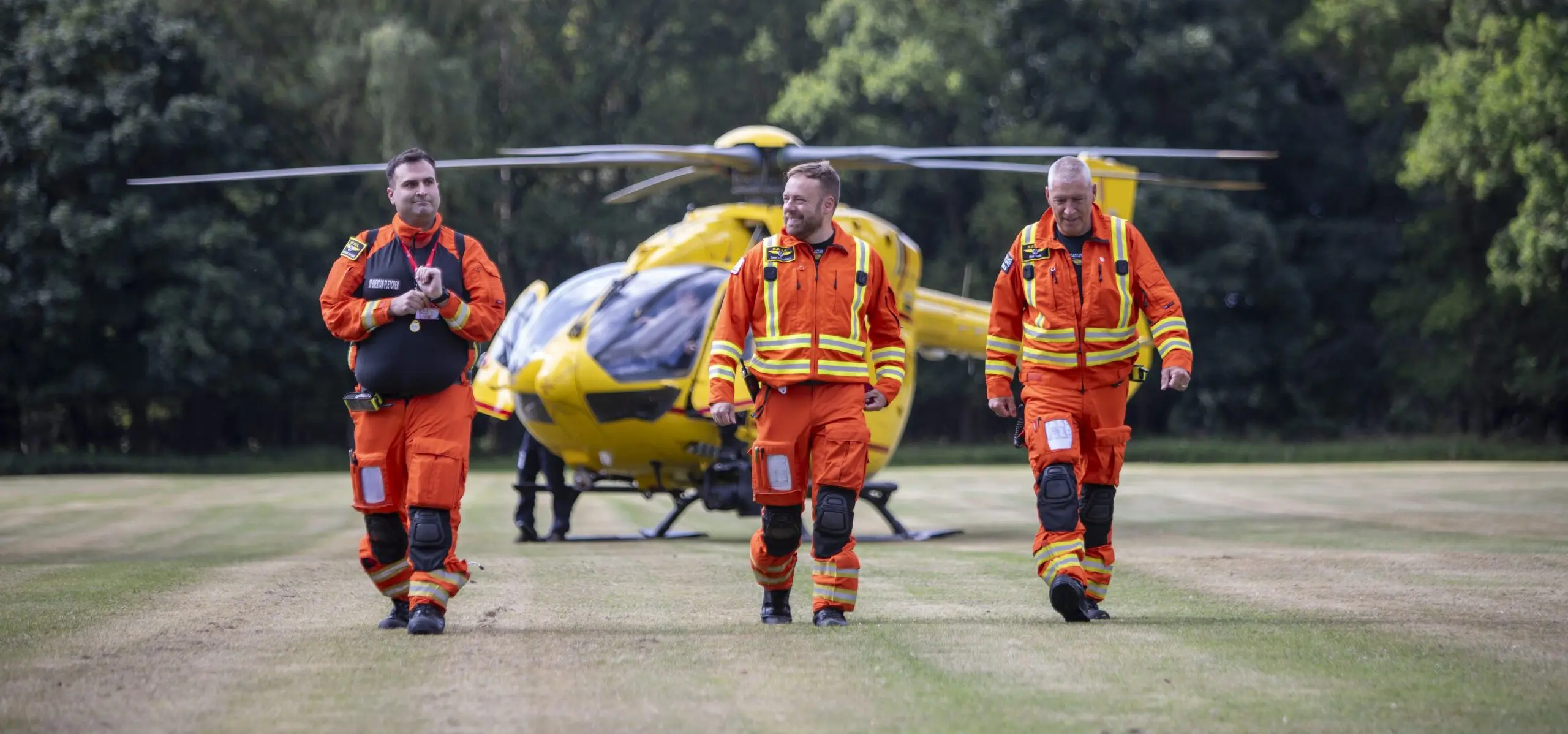
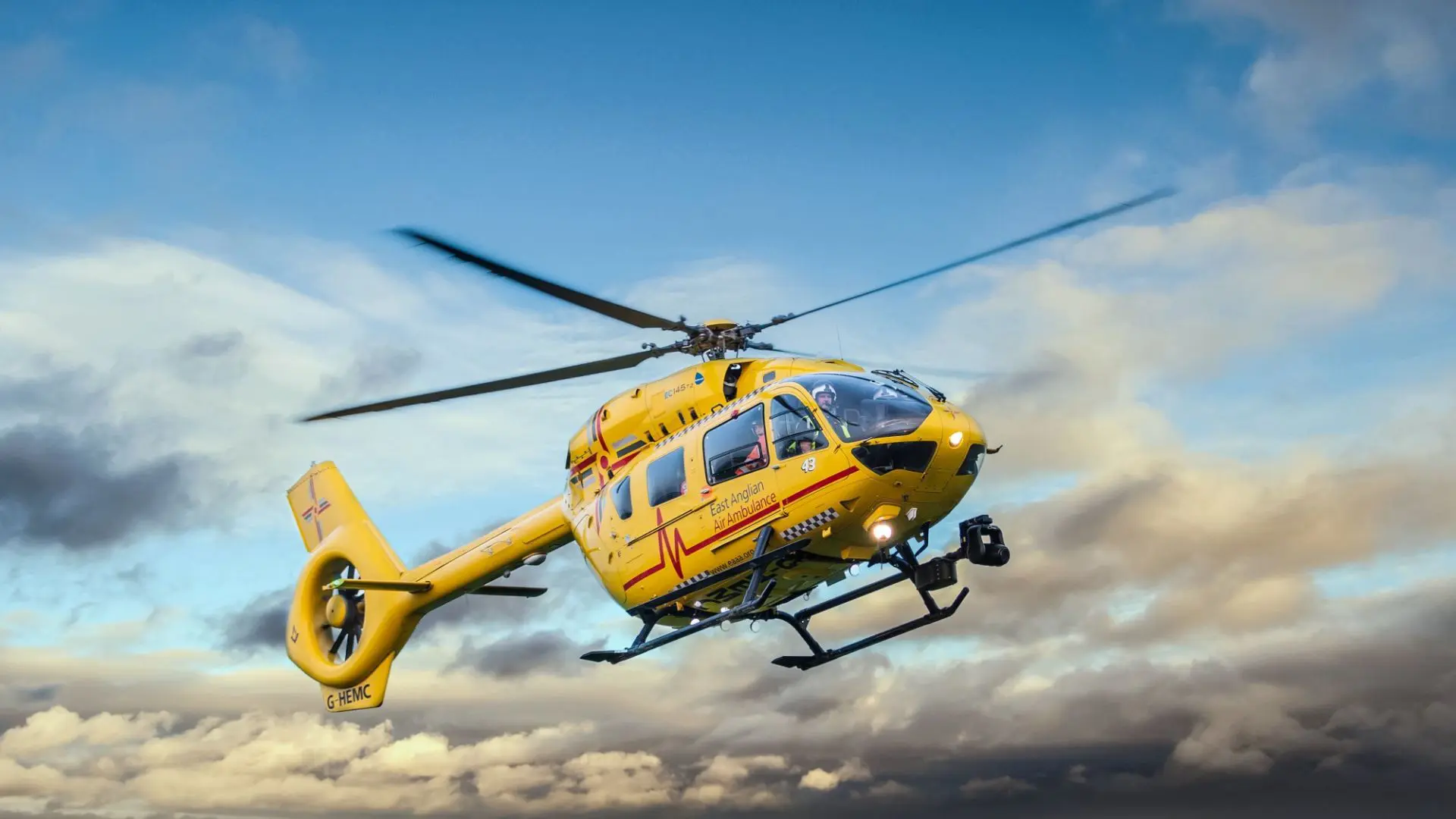
These incredible aircraft are at the heart of our lifesaving mission – and, thanks to your support, they’re ready to respond 24/7.
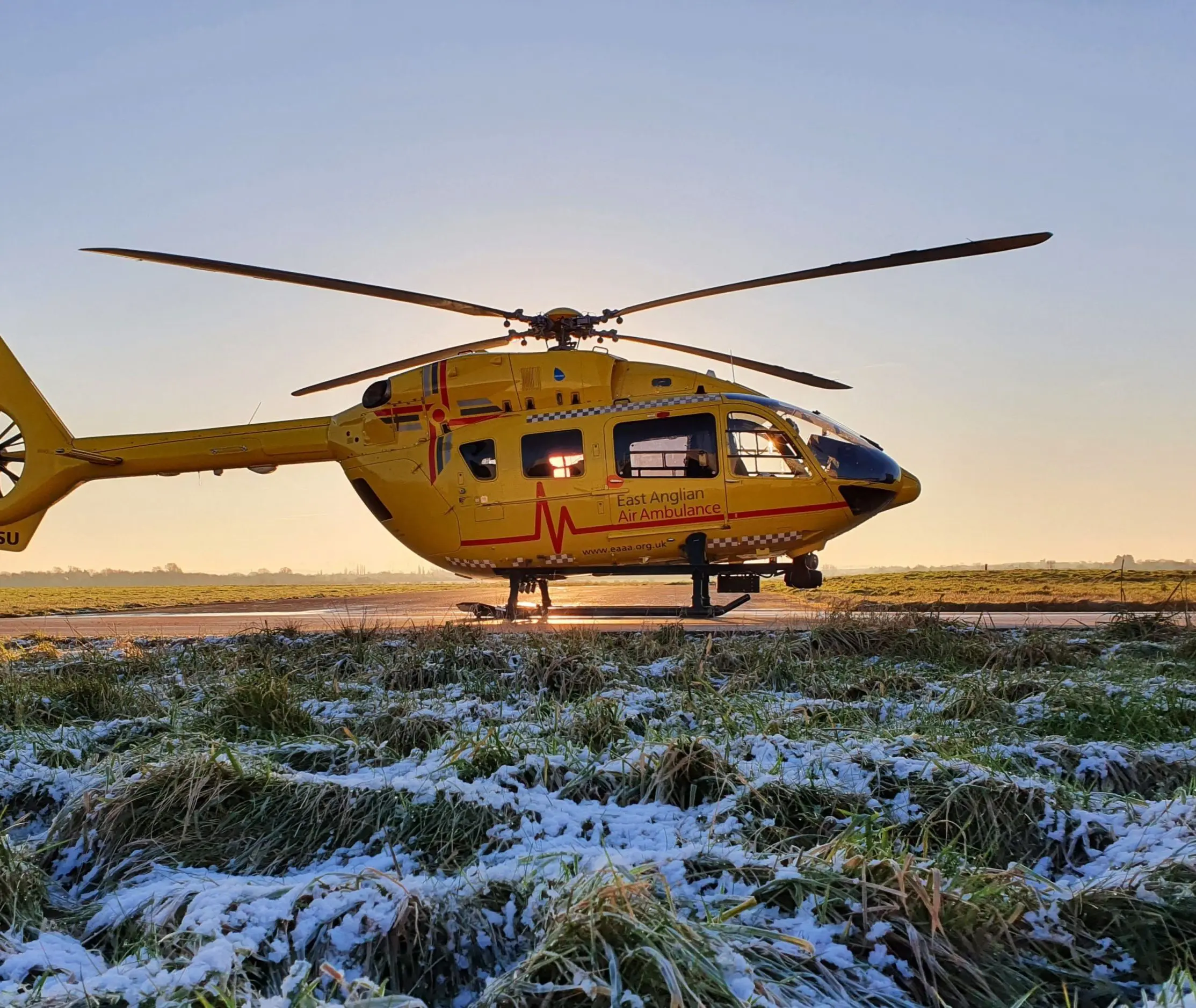
Fun fact: Our helicopters are bright yellow because our very first sponsor was The AA! Over the years, we’ve changed aircraft to meet the needs of our patients and communities, but that distinctive colour has stayed.
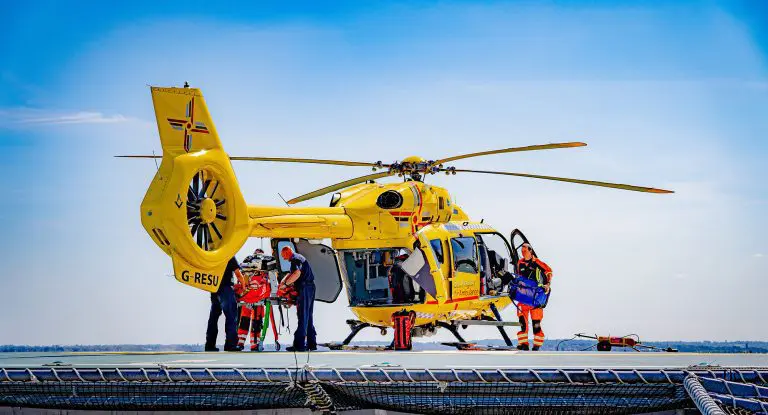
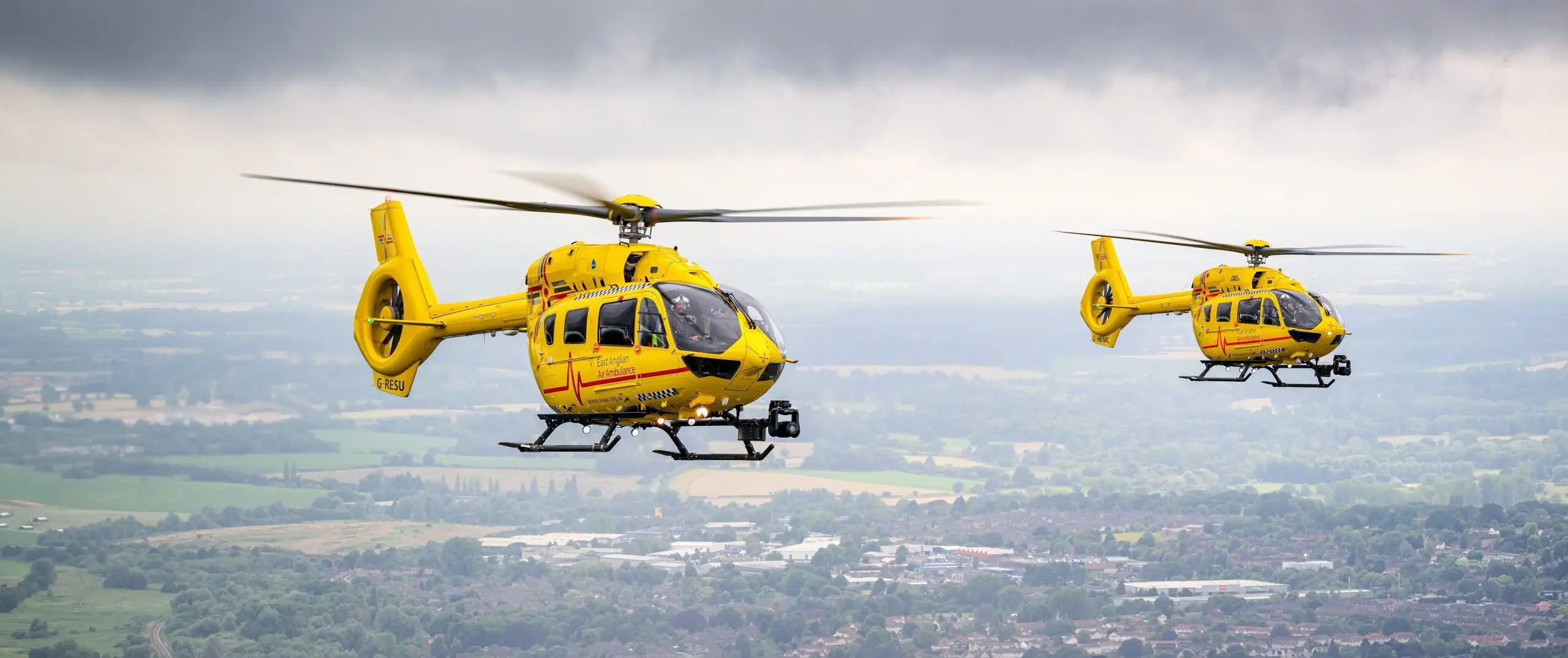
Our aviation partner, Babcock, provides the helicopters, pilots, and engineers. Each H145 can carry:
With a cruising speed of around 140mph, we can cover 20 miles in under 10 minutes – getting critical care to the scene fast across the 5,326 square miles we serve.
400
MILE RANGE
57%
INCIDENTS BY AIR
167 MPH
TOP SPEED
25 MINUTES
ANYWHERE IN EAST ANGLIA
‘Alpha’ means the helicopter is on a HEMS (Helicopter Emergency Medical Service) tasking, so it takes priority over other aircraft (except when there is a mayday call).
‘Echo’ means the aircraft is not on an emergency or carrying a patient, so normal priority applies.
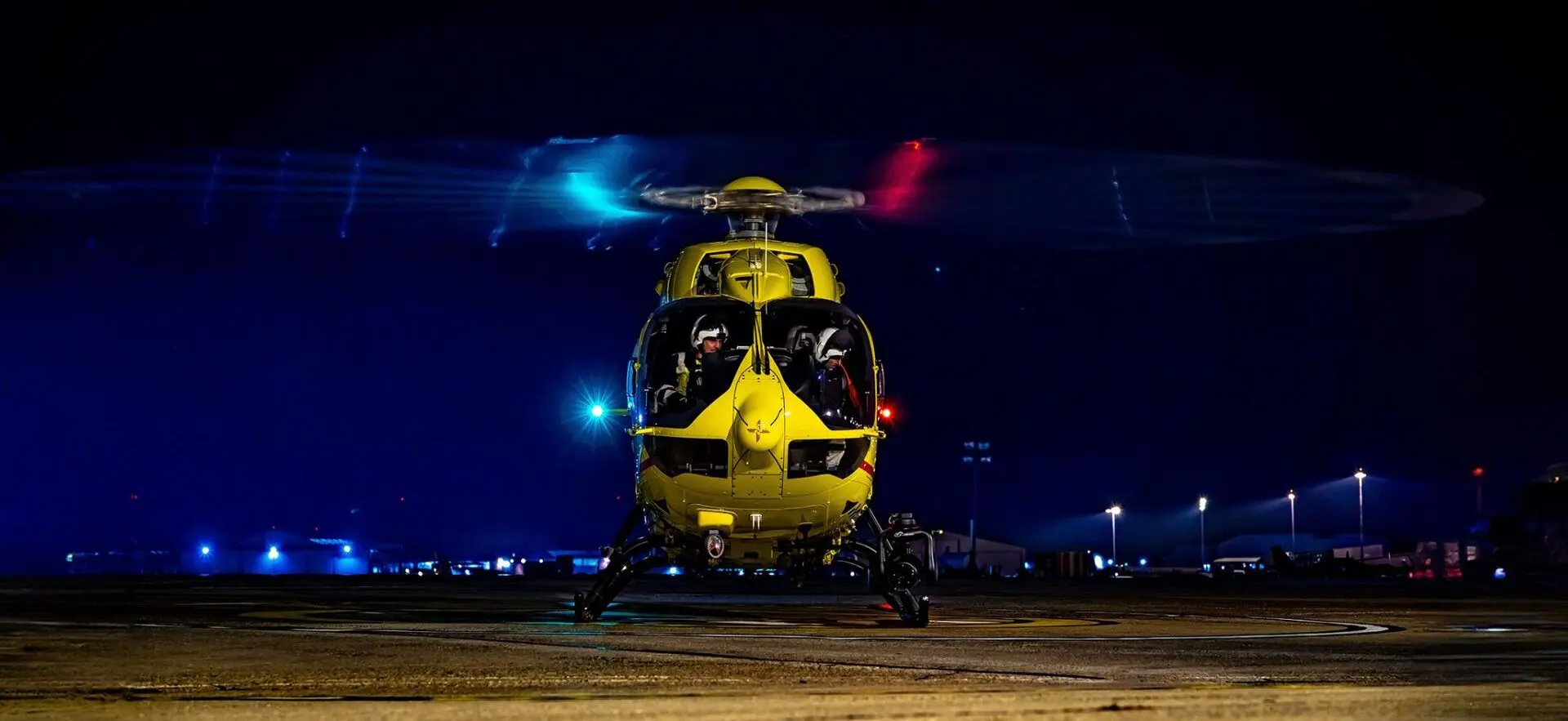
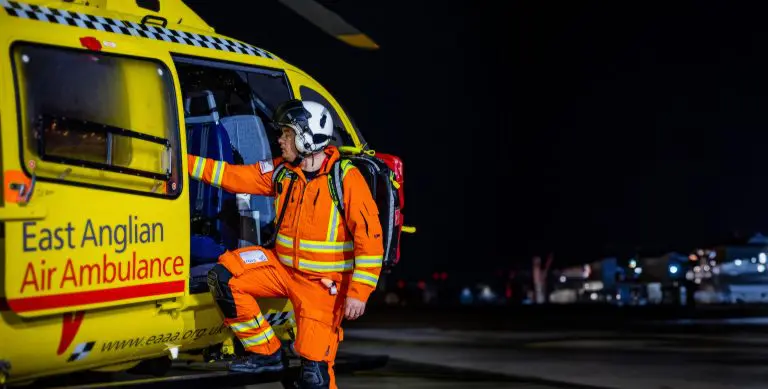
Since June 2021, we have flown around the clock – the first air ambulance in the east of England to do so.
Why two pilots? Night flying is complex and safety is everything. Two pilots mean extra eyes, better decision-making, and a backup if one becomes unwell. Our clinicians also help with navigation and use night vision technology to spot hazards. It really is a team effort.
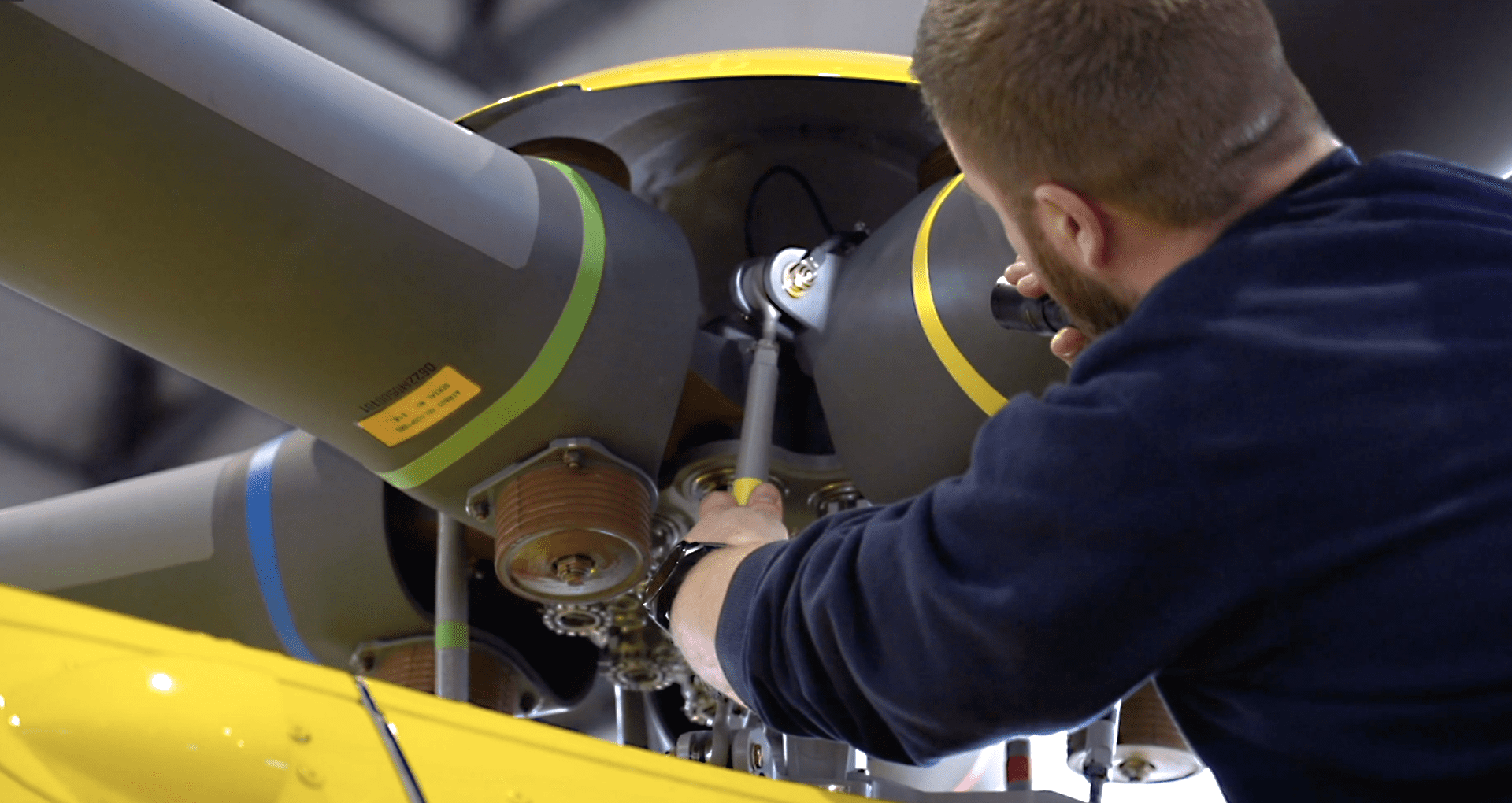
Both helicopters now have five rotor blades (upgraded in 2022 and 2023) instead of four. This means smoother flights with less vibration (better for patient monitoring), and more payload and range – this is especially important at night when landing and refuelling options may be limited.
Our pilots are highly skilled, many with military backgrounds where they have gained many years’ experience of flying to and landing at surveyed sites. iPads with Google Earth overlays support them to identify safe landing spots and hazards, like power lines.
You might see the helicopter circle in a ‘racetrack pattern’ before landing – that’s the crew checking for hazards and planning the safest landing site. To do this, they follow the Five S rule: Shape, Size, Surround, Surface, Slope. Downwash is also a vital safety consideration; the downwash created by the powerful rotor-blades is extremely powerful and is enough to throw debris into the air or cause somebody to fall. When it comes to helicopters and aviation, safety – for people in the air and on the ground – is everything.
Pilots keep a close eye on the weather all year round, as it can affect how they fly.
In summer, the hot air is thinner, which means the aircraft needs more power – and more fuel – to get airborne. In winter, frost and ice can build up on the helicopter, so pilots often move it into the hangar. It’s much quicker to roll the aircraft out, using a special piece of equipment called a Helilift, than to spend time de-icing when a call comes in.
Weather forecasts and maps are monitored constantly. If strong winds are predicted – over 30 knots – the team will consider the impact on the rotor blades and may also move the helicopter inside.
Our pilots are fully trained to fly using instruments alone and the aircraft is equipped with a state-of-the-art autopilot system for instrument approaches to airfields.
For daytime flying, we need a cloud base of at least 600ft and visibility of 1.5km. At night, that increases to 1,200ft and 2.5km. A live weather display in the crew room helps the team plan ahead.
If conditions mean the helicopter can’t fly, our 24/7 service continues without interruption because our critical care cars carry the same life-saving equipment as the helicopter – everything except a stretcher – so patients still receive the highest level of care.
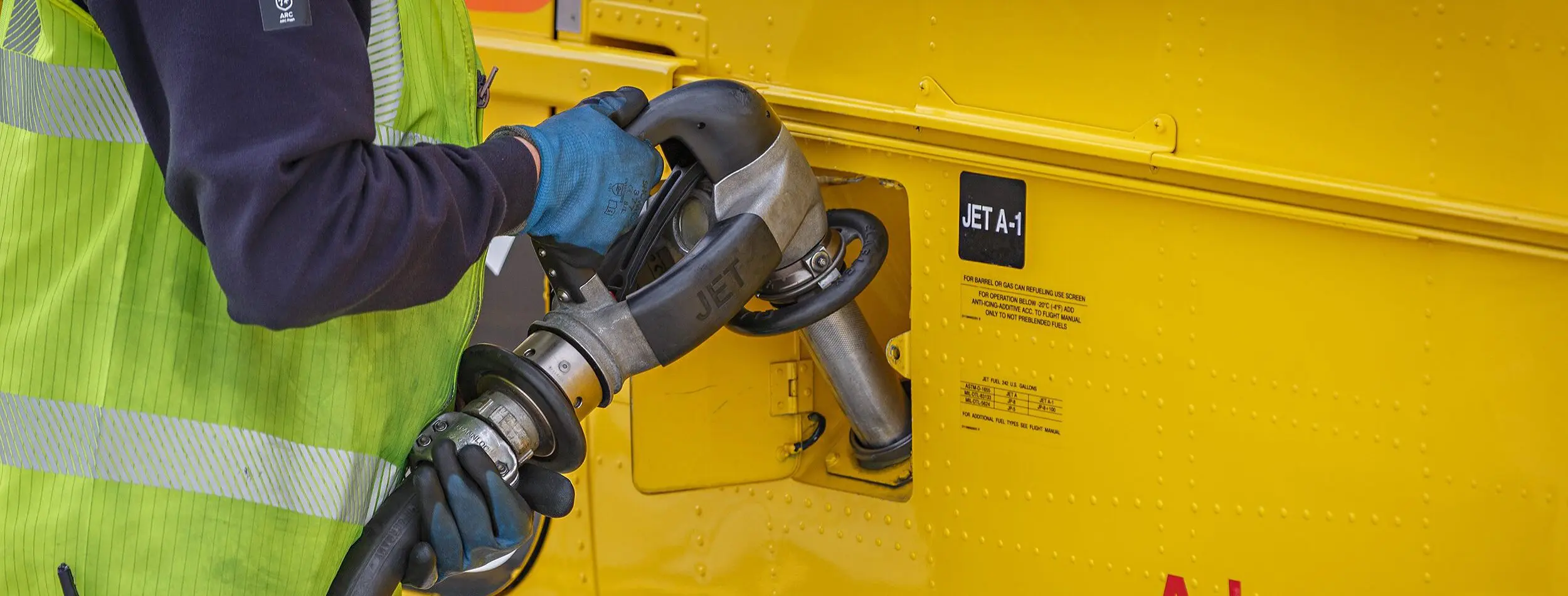
Our Norwich-based aircraft uses airport refuellers by day and a 2,000-litre bowser at night.
Cambridge has its own bowser for refuelling.
Our H145 helicopter has two engines. It can still fly on just one if needed, though the pilots will notice a little less power, especially when landing.
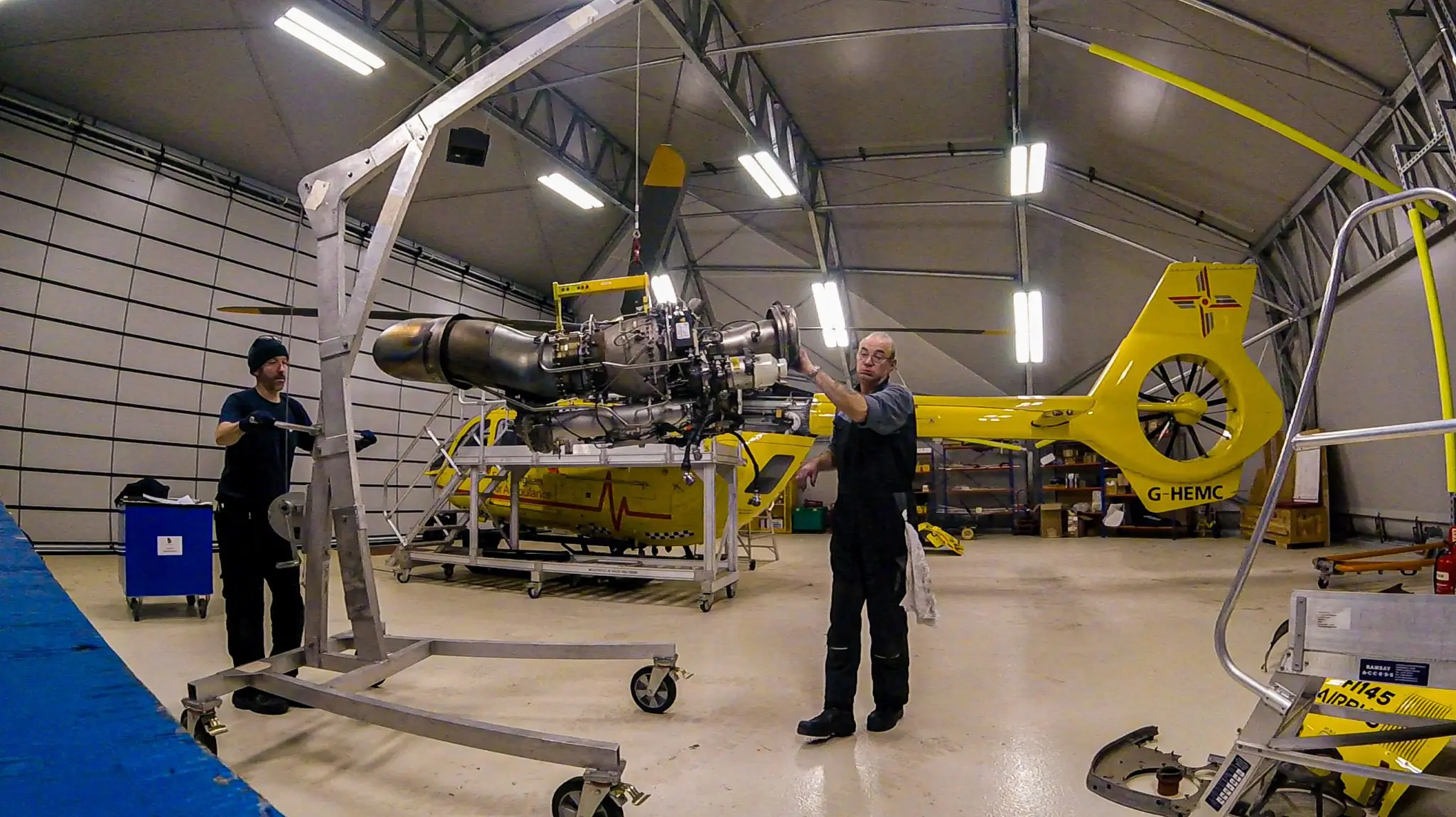
When it comes to looking after the aircraft, some maintenance happens right at home in our own hangars thanks to Babcock engineers. For bigger jobs or regular deep servicing, the helicopters head to Babcock’s bases in Staverton or Glasgow.
We’ve got one Babcock engineer based in Cambridge and two in Norwich, but if we need extra hands, Babcock can send more. Their work covers everything from engines and gearboxes to rotor blades. And while our helicopter is being serviced, they provide a replacement aircraft – usually a bright yellow H145 with the callsign G-EMSS – so we can keep delivering our lifesaving service by air without interruption.
Your support keeps our helicopters flying and saving lives every single day. Thank you for making this possible.