What happens at scene?
From the moment our crew receive a call, everything is focused on one thing: giving our patient the safest, fastest, and best possible care.
Planning for the moments that matter
Behind every tasking is careful planning – from the pilots mapping the quickest route, to the clinicians considering treatment and care – so that when they arrive at the scene, they’re ready to act.
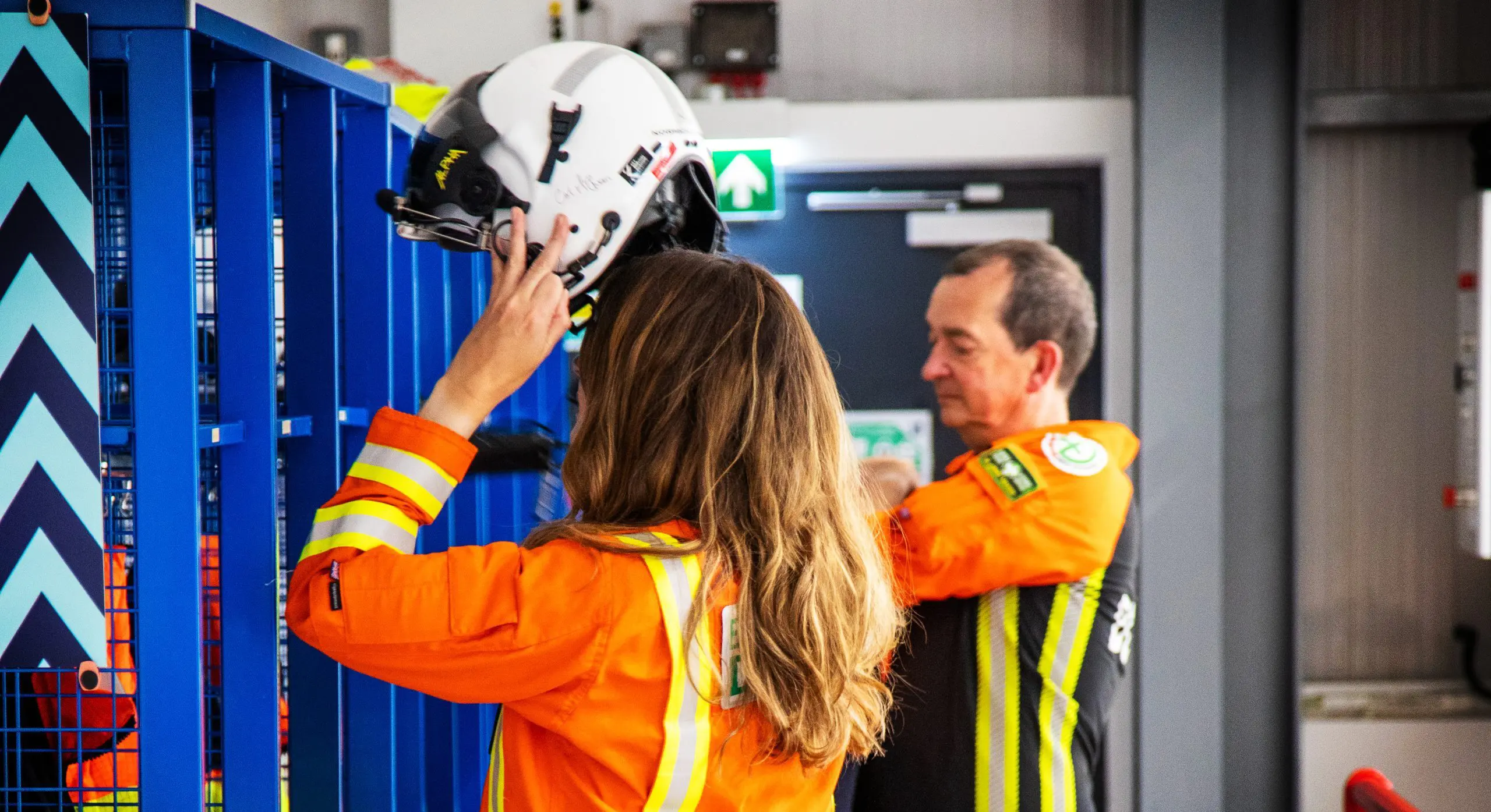
At the start of each shift, the team – usually two to three clinicians, including at least one doctor and one critical care paramedic – gather for a briefing. They talk through roles and responsibilities, making sure everyone is clear and confident for whatever the day brings. Our crews work as one, with an interchangeable model that means doctors and paramedics can step into each other’s roles if needed. Each brings unique skills, and together they deliver hospital-level care wherever it’s needed most.
Our care can be broken down into a number of phases. Below is an example of how a clinician might approach a scene of an incident, and plan and deliver care to somebody who is seriously injured or unwell:

Getting to our patient
When an emergency happens, the Critical Care Desk decides if our team is needed and shares the details – where the patient is, what’s happened, and any extra information that might help. Our crew also check things like weather, landing options, and how quickly we can get there to decide whether we respond by helicopter or critical care car.
As soon as the crew is on the move, they use every moment to prepare. They’ll plan treatments, medication and gather updates from the Critical Care Desk so they’re ready to act the second they arrive.
If the helicopter can’t land close to the scene, the team will also work with the Critical Care Desk to get from the landing site to the patient as quickly as possible. Often, another emergency service vehicle can collect them from the landing site to get them to the patient’s side.
Arriving at the scene
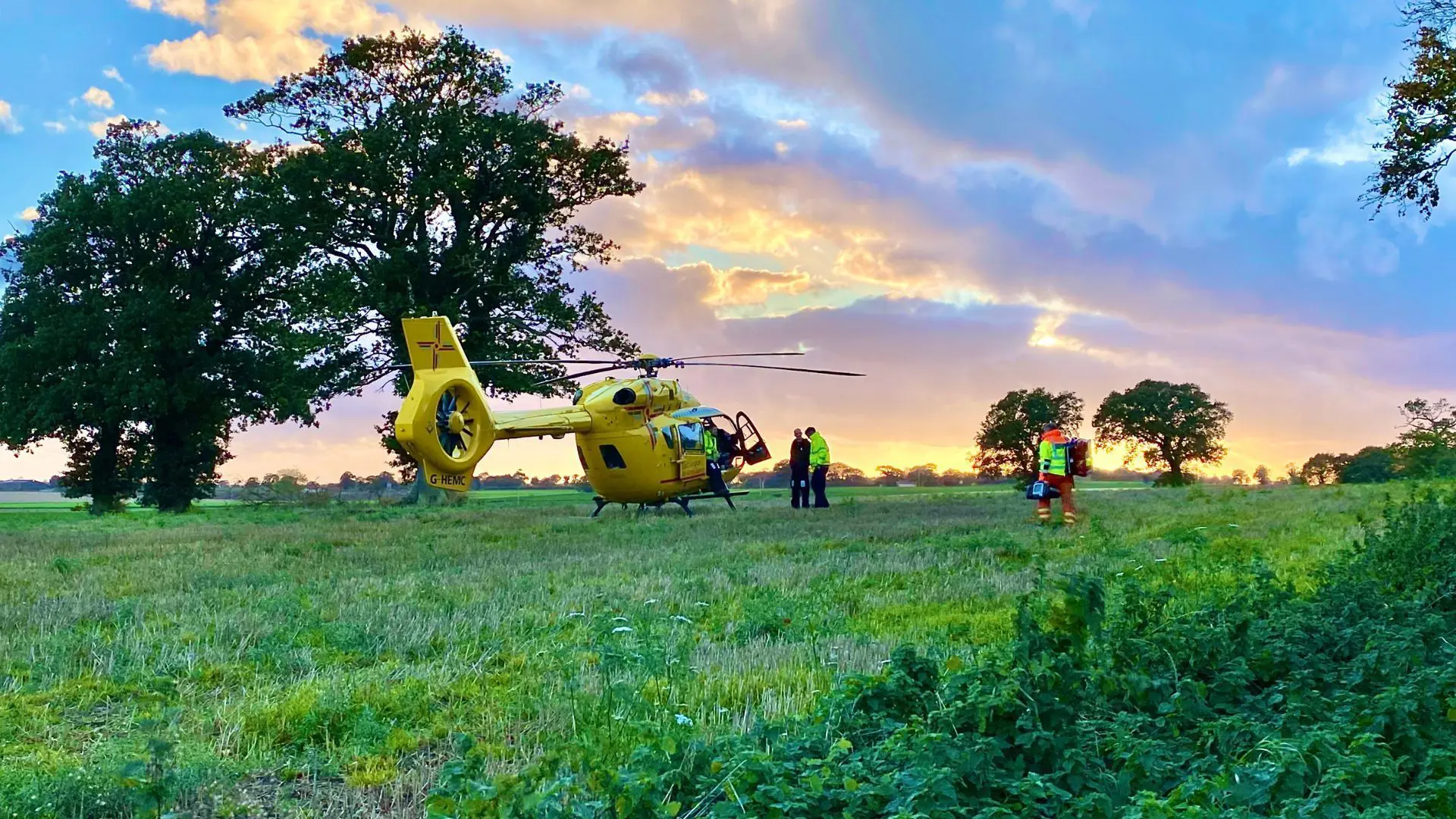
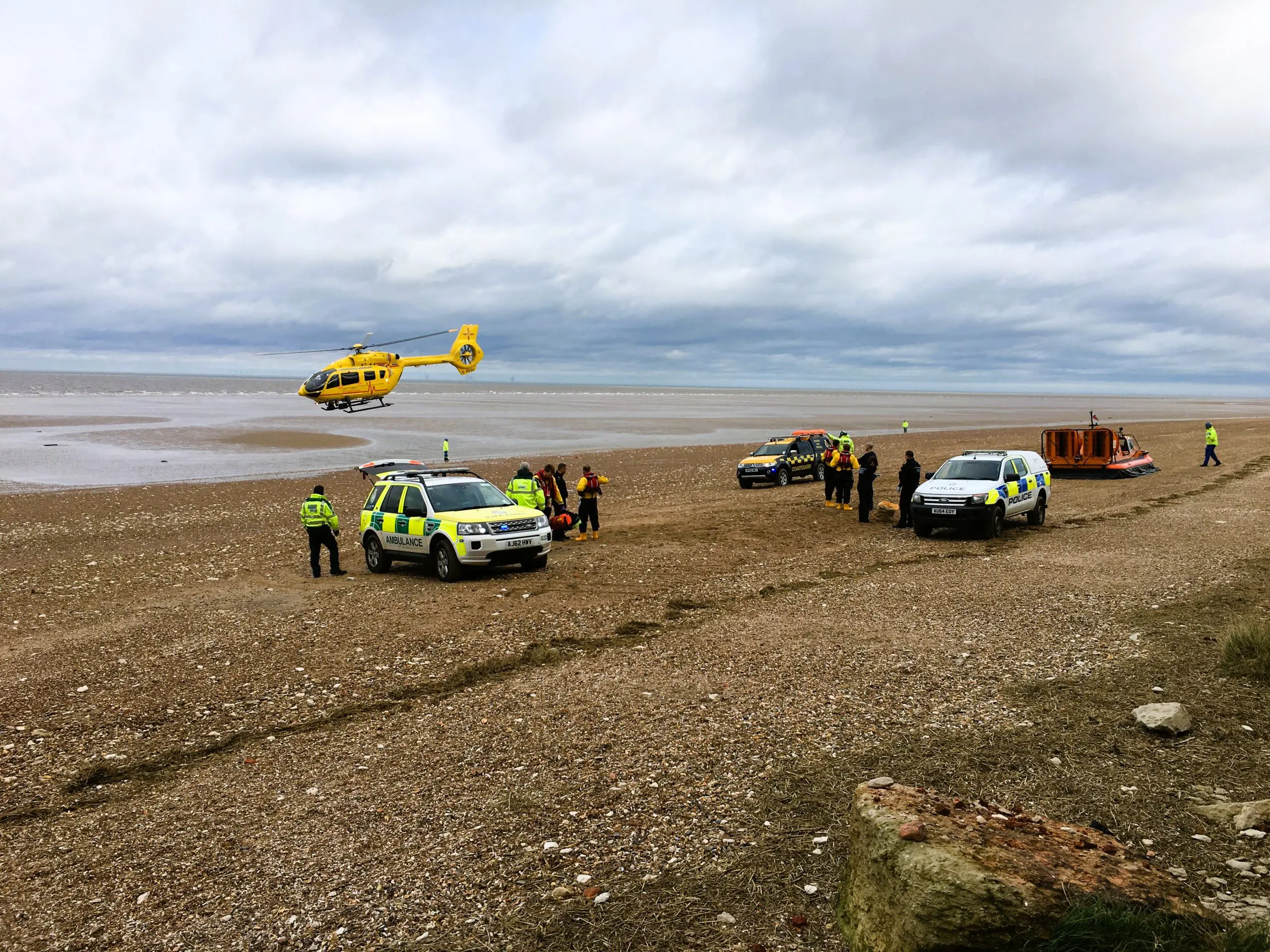
Safety is always the top priority. The pilots give the all-clear before anyone steps out of the helicopter, so the clinicians stay secure inside until they know it’s safe.
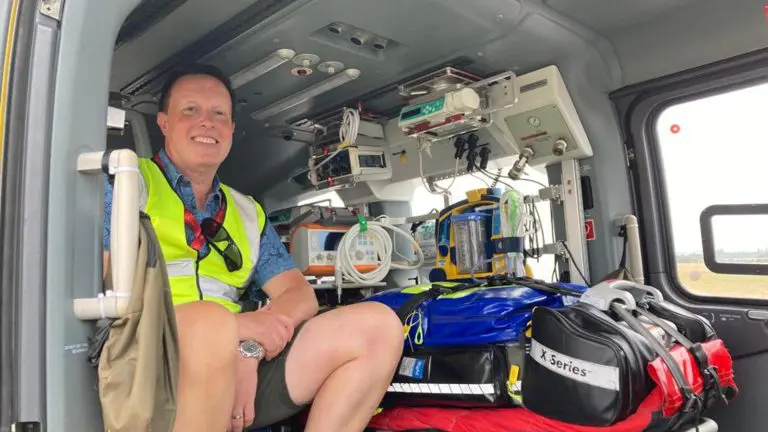
Once they get the thumbs-up, the team moves together with their kit bags – critical and immediate care bags which include everything they might need to give lifesaving care. This usually includes critical care and monitoring equipment, and oxygen, blood products, or even a ventilator, depending on the emergency.
Every step is calm, coordinated, and focused on getting to the patient quickly and safely.
Teamwork and decision-making
When our crew arrives, our colleagues from the ambulance service are often already there. The first step is teamwork – listening carefully to their handover so we understand what’s happened and what the patient needs.
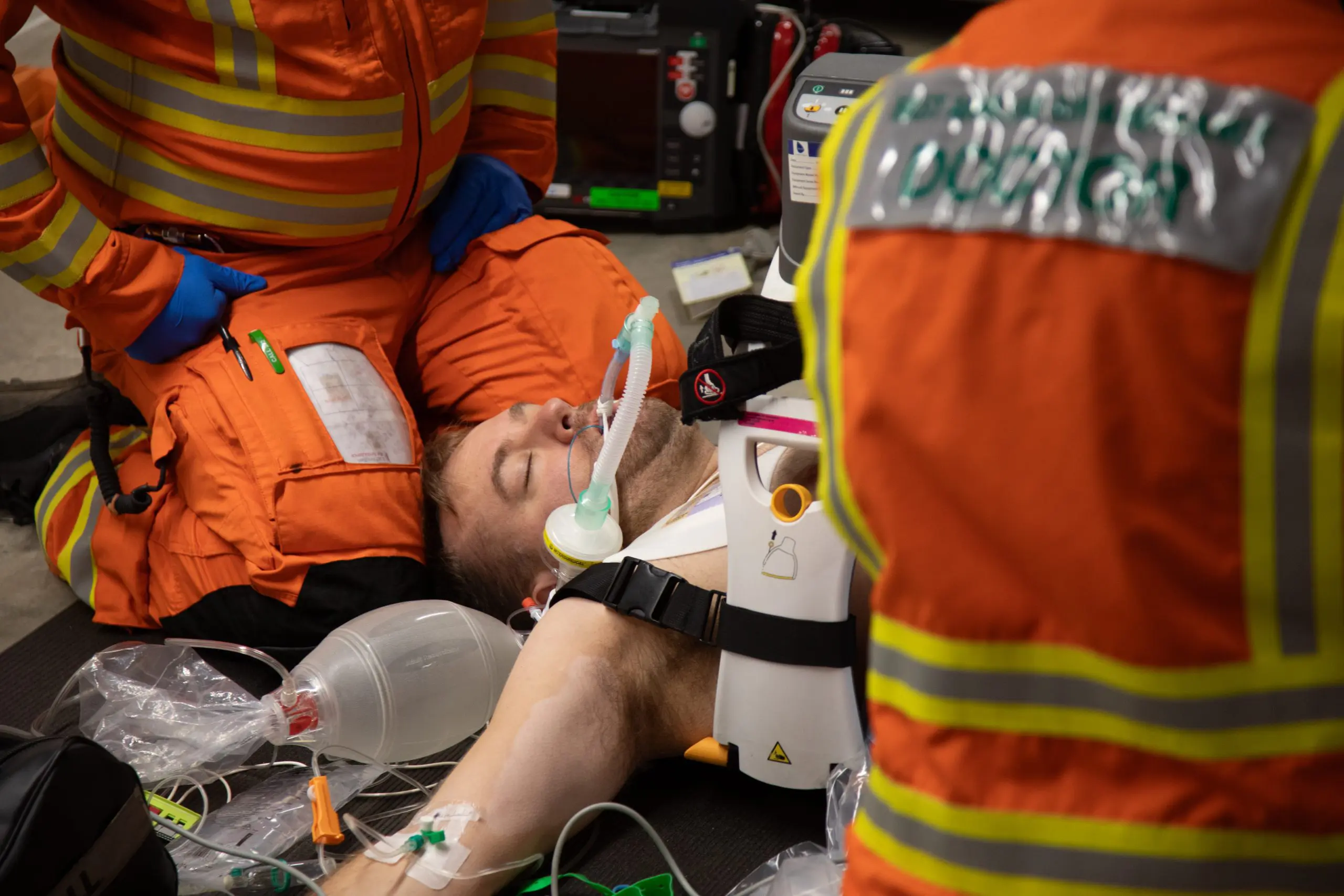
Next, our clinicians carry out a full assessment. They look for both obvious and subtle signs of serious illness or injury, because every detail matters. To help guide decisions, they attach monitoring equipment such as:
- ECG leads to check heart rate and rhythm
- Blood pressure measurement
- Oxygen and carbon dioxide level monitoring.
These vital checks give the team the information they need to decide on the best treatment at the scene.
Treatment and care
Once our crew has assessed the patient, they decide what needs to happen next to give them the best possible chance of survival and recovery. This can include:
- Performing lifesaving procedures like SPEAR in the event of a cardiac arrest
- Giving advanced medication to ease pain or prevent infection
- Carrying out surgical interventions
- Giving blood products
These are complex treatments that would normally take place in a hospital – but thanks to our skilled crews and the support of our community, we can bring them straight to the patient.
Transporting somebody to hospital
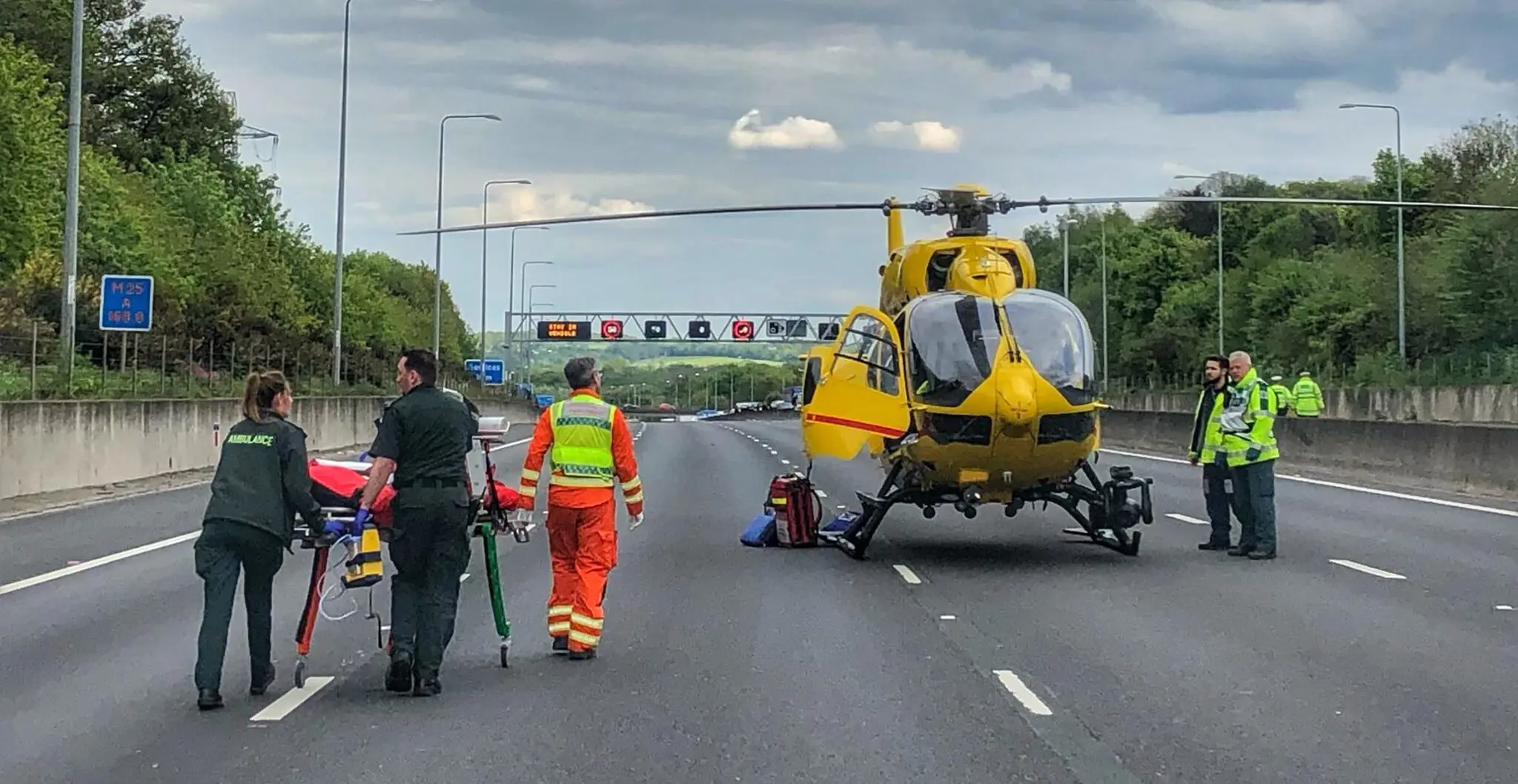
After treatment at the scene, the crew decides which hospital will give the patient the best chance of recovery. They think about everything – the patient’s condition, where the incident happened, how long the journey will take, and whether it’s safer to go by air or by road ambulance.
Often, our doctor and critical care paramedic will travel with the patient in a land ambulance to continue to monitor them and provide expert care en-route.
Before we set off, we call ahead to the hospital to let them know we’re coming and share all the details they need. When we arrive, our team gives a full handover, so the patient’s care continues seamlessly.
And we never forget about somebody’s loved ones and bystanders at the scene. Where possible, we keep them updated and explain what’s happening and why. We also give them one of our special cards with details of who attended and the contact details of our aftercare team, so they can reach out for support in the immediate aftermath, and beyond.
Hospitals for ongoing treatment and care
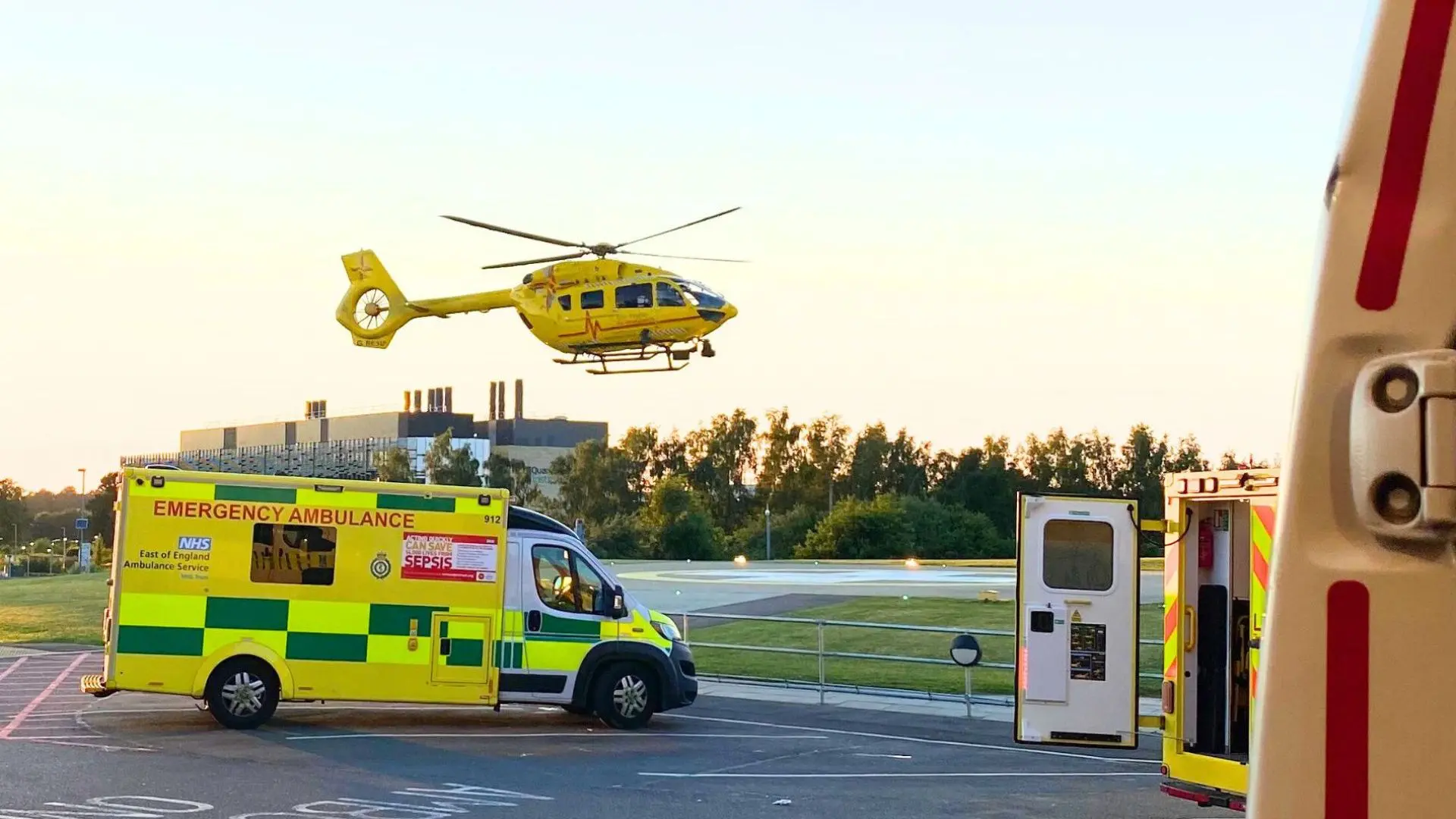
We work closely with hospitals across Bedfordshire, Cambridgeshire, Norfolk, and Suffolk to make sure patients get to the right place at the right time for the care they need. This includes:
- Cambridge University Hospitals, Addenbrooke’s Hospital (the region’s Major Trauma Centre) and Royal Papworth.
- Bedford Hospital.
- Luton and Dunstable Hospital.
- Peterborough City Hospital.
- The Queen Elizabeth Hospital, King’s Lynn.
- Norfolk and Norwich University Hospital.
- James Paget University Hospital, Gorleston.
- West Suffolk Hospital.
- Ipswich Hospital.
Sometimes, we’ll transfer patients to other hospitals if that’s what’s best for them. Acting quickly, providing advanced care at the scene, and getting patients to the right hospital as fast as possible can make all the difference – and it’s what helps save lives every day.