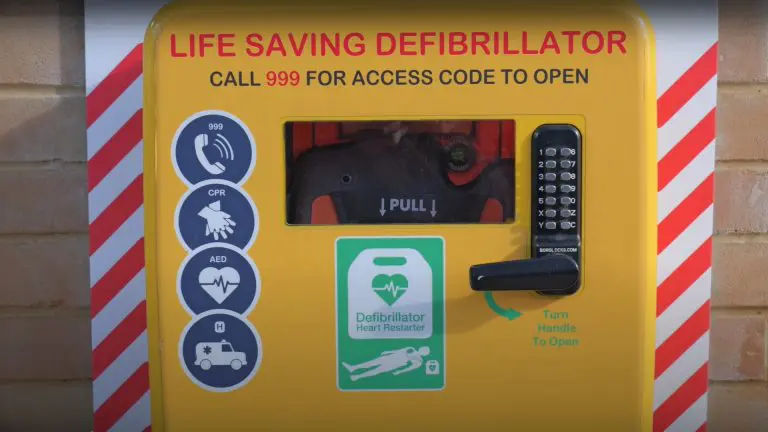
How to use a defibrillator
An AED, short for Automated External Defibrillator, is a life-saving piece of equipment that can be used on someone suffering from a cardiac arrest.
One in four of the emergencies to which EAAA is tasked are cardiac arrests. CPR stands for cardiopulmonary resuscitation. It is when somebody performs chest compressions on someone who is in cardiac arrest to help keep them alive.
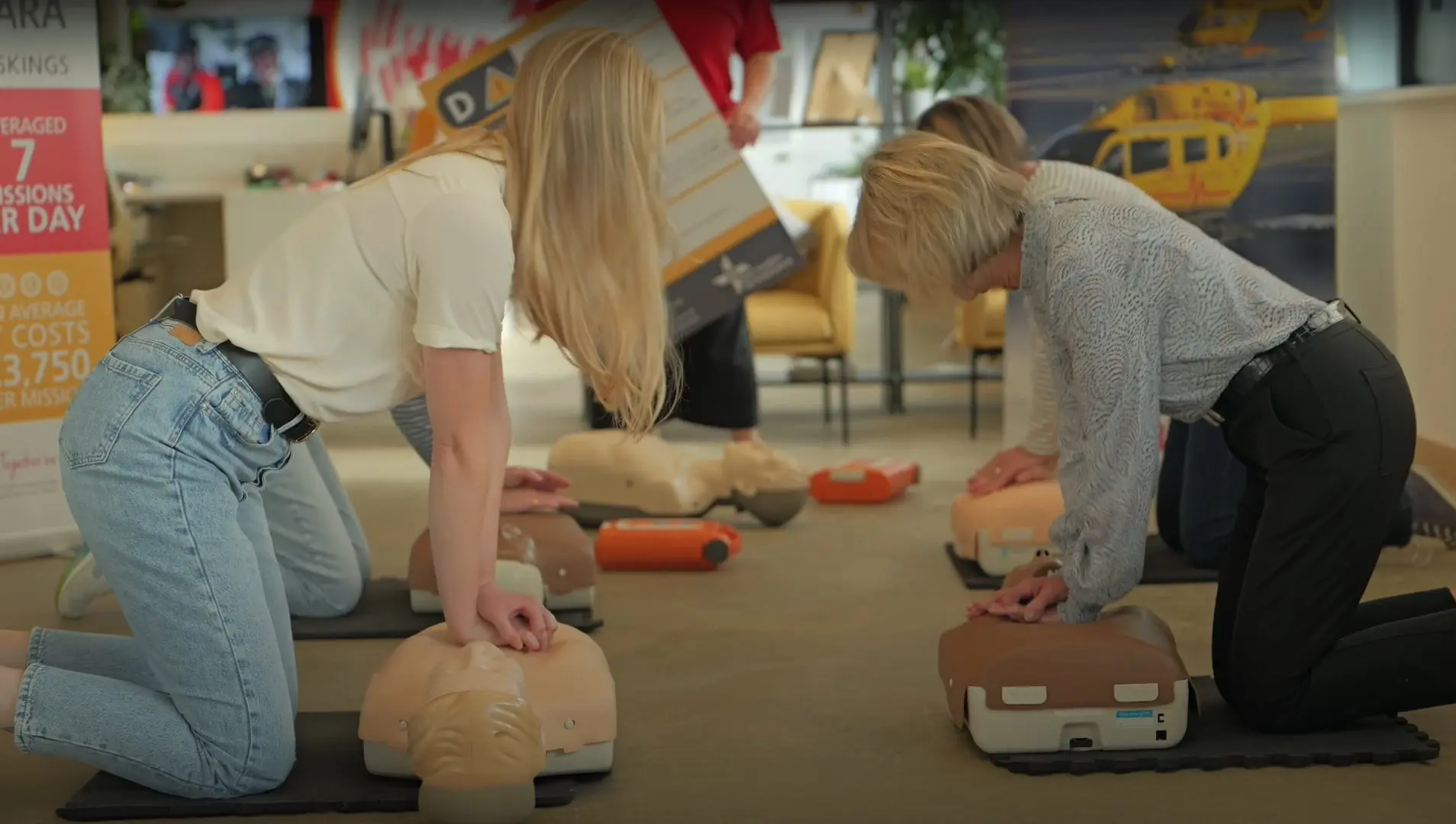
CPR works by circulating oxygenated blood around the body and to the brain via chest compressions. Essentially, CPR keeps the person alive whilst waiting for the emergency services to arrive. CPR doesn’t restart a heart, rather it provides oxygenated blood to the brain.
Early bystander CPR can treble the chances of surviving a cardiac arrest. Survival rates with early use of CPR and defibrillation can be as high as 70%, but public access defibrillators are only used in a small minority of cases (Resuscitation to Recovery RCUK March 2017).
The out-of-hospital cardiac arrest survival rate in the UK is only around 8%; however, if a defibrillator is used alongside effective CPR within the first 3-5 minutes, the chances of survival can increase to between 40% – 70%.
Sometimes bystander CPR is performed on strangers, but in many cases, it is performed on loved ones.
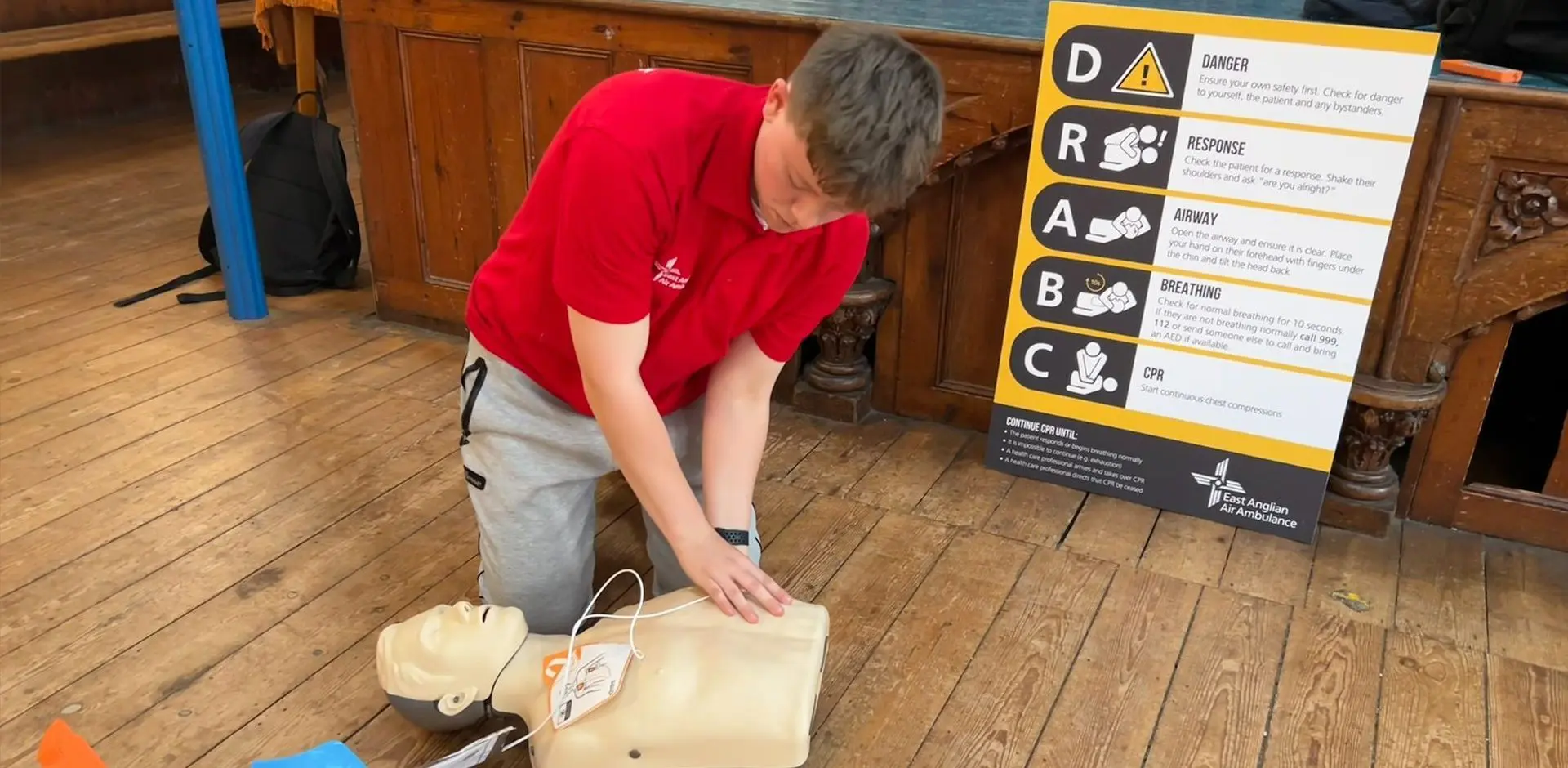
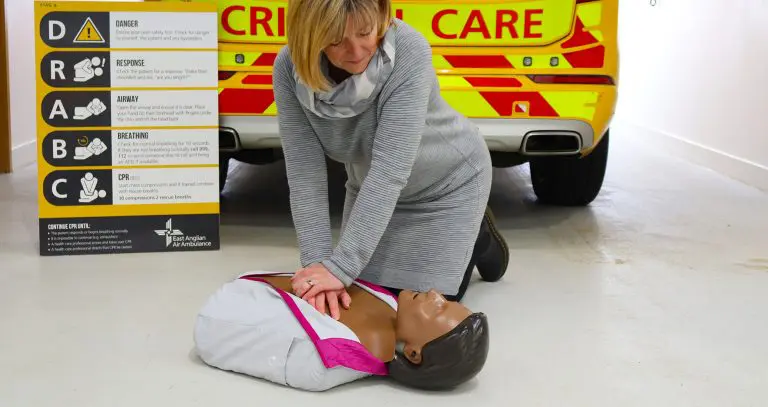
Remember the acronym DRSABC if you need to perform life-saving CPR:
D: DANGER: Ensure your own safety first. Check for danger to yourself, the patient and any bystanders.
R: RESPONSE: Check the patient for a response. Tap their shoulders and ask “are you alright?”
S: SHOUT FOR HELP/USE YOUR SPEAKERPHONE: Shout for assistance and use speakerphone on your mobile phone so both hands are free to help the patient.
A: AIRWAY: Open the patient’s airway and ensure it’s clear. To do this, place your hand on their forehead with fingers under the chin and tilt the head back.
B: BREATHING: Check for normal breathing for ten seconds. If the patient is not breathing normally, call 999 or send somebody else to call and bring an AED (defibrillator) if available.
C: CPR: Start continuous chest compressions. If you are trained to give rescue breaths, give 30 chest compressions followed by two rescue breaths. If you are unable or untrained to give rescue breaths, give chest compressions only (continuous compressions at a rate of 100-120 per minute at a depth of 5-6cm). Ensure adequate backward head tilt if giving rescue breaths.
An AED, short for Automated External Defibrillator, is a life-saving piece of equipment that can be used on someone suffering from a cardiac arrest.
It is important to understand the difference between a heart attack and a cardiac arrest so you can take the correct necessary actions to increase somebody’s chances of a positive outcome.
Imagine an emergency unfolding. We’re on our way, but you’re already there. That’s why we need you – because your actions in those first few minutes could save a life. And the good news? You don’t need to be a doctor to help.