Hospitals and helipads
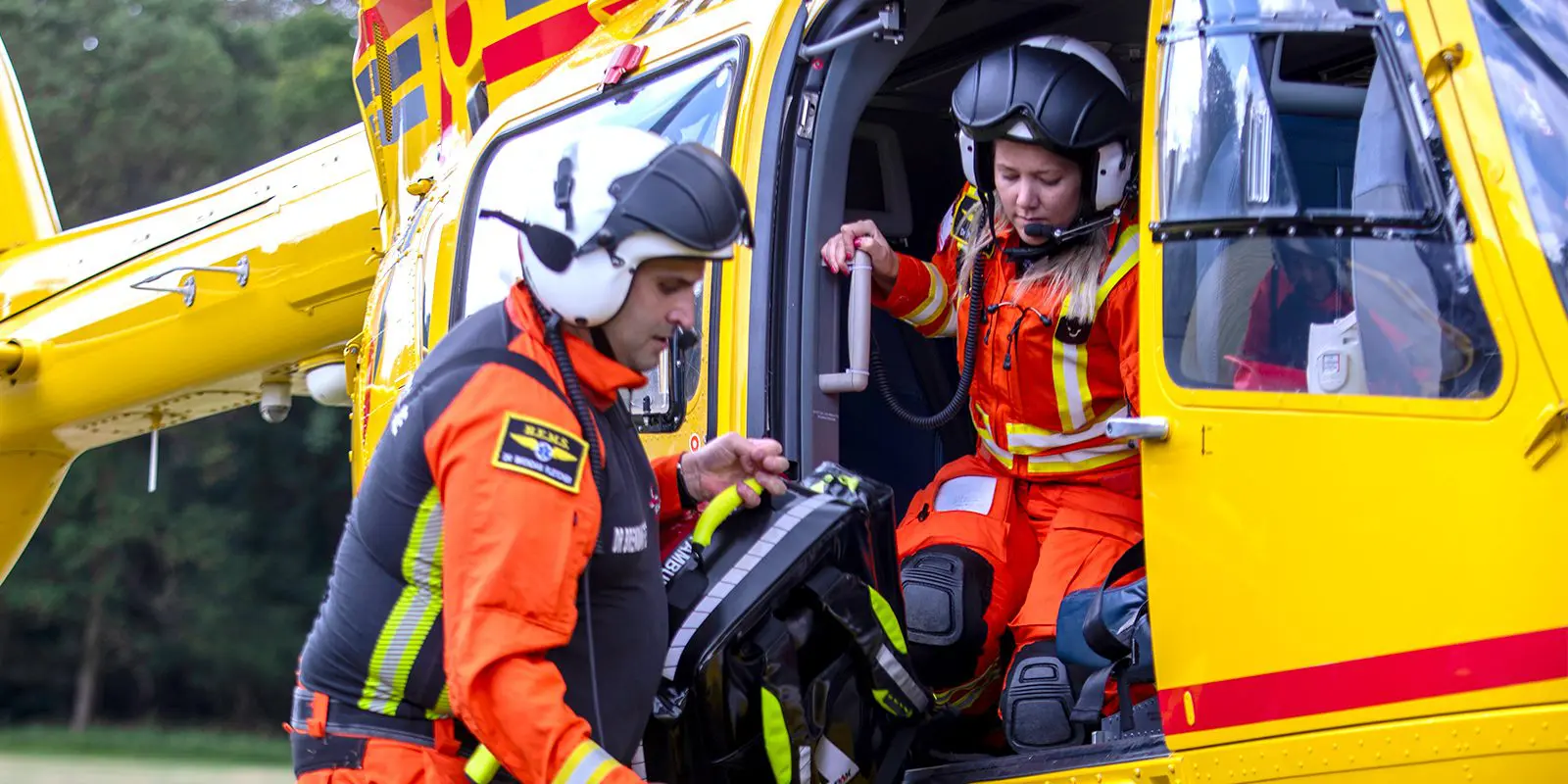
Every decision the crew makes is about giving the patient the very best chance of survival and recovery. That includes choosing the hospital with the right specialists for their condition. It’s never done alone - our team works hand in hand with regional hospitals to make sure everything is lined up for the care they’ll need after a life-threatening emergency.
Transporting a patient to hospital
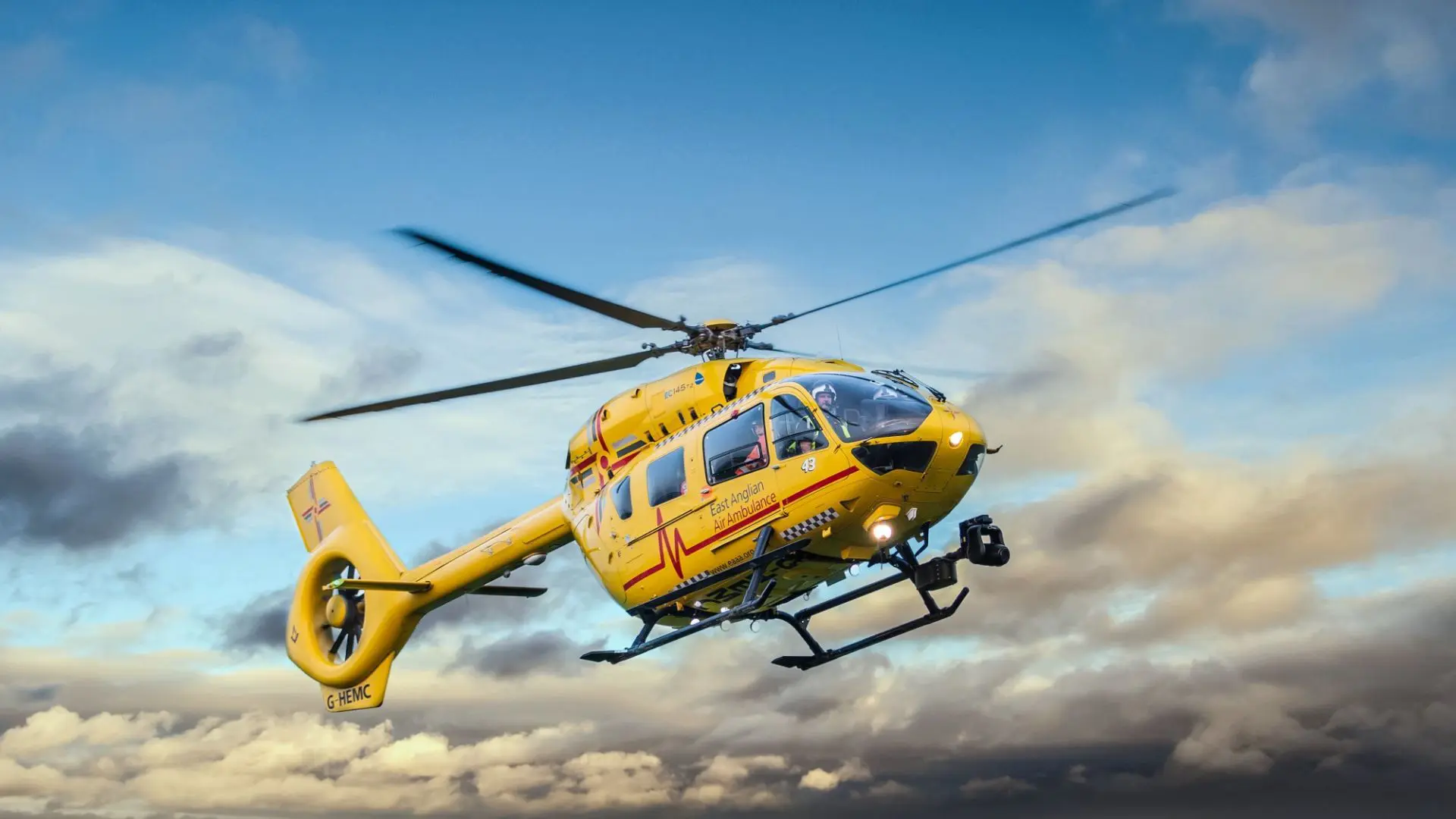
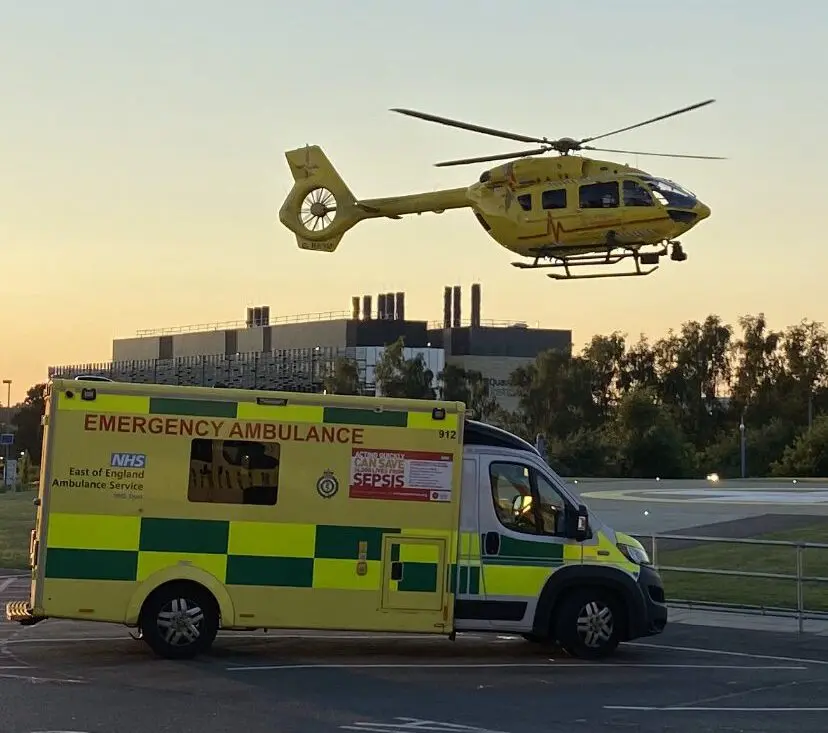
Sometimes the quickest way is by helicopter, other times it’s by land ambulance. The team decides what’s safest and fastest for that patient, in that moment. Whatever the route, the goal never changes; getting them to the right place, at the right time, with the right care.
The hospitals we most commonly transfer and accompany patients to are:
- Cambridge University Hospital, Addenbrooke’s – our region’s Major Trauma Centre (MTC)
- Norfolk and Norwich University Hospital – specialist cardiac services
- Ipswich Hospital
- James Paget University Hospital, Gorleston
- West Suffolk Hospital
- Cambridge University Hospital, Royal Papworth – cardiac and lung specialisms
- Queen Elizabeth Hospital, King’s Lynn
- Lister Hospital, Stevenage
- Bedford Hospital
- Broomfield Hospital, Chelmsford – burns and plastics specialism
- Peterborough City Hospital
Sometimes we are called to patients outside our usual counties Bedfordshire, Cambridgeshire, Norfolk and Suffolk. This might happen if other air ambulances are already busy, or if the patient needs to be taken straight to the most appropriate hospital, like a Major Trauma Centre or other specialist unit.
On average, we transfer by air or accompany by road ambulance two patients every day to the Norfolk and Norwich University Hospital, and one patient each day to Cambridge University Hospitals for onward treatment.
In some cases, we support our colleagues from the ambulance service at the scene. The ambulance service will then take the patient by land ambulance to hospital, unaccompanied by our crew. We call this a scene assist. It means that the patient still gets the advanced specialist skills and critical care straight away, and our crew is ready for the next emergency callout.
When transferring a patient by air, being able to land as close as possible to the hospital is critical
In 2024, 55% of our taskings were by helicopter, and 155 patients were flown straight to hospital. That’s why helipads aren’t just concrete pads; they’re lifesaving gateways.
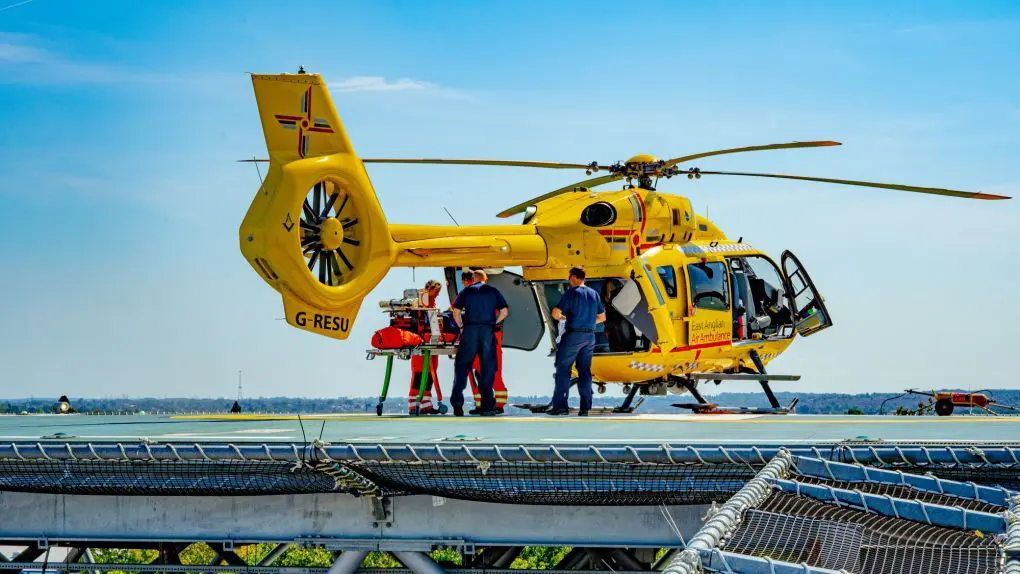
Helipads play a vital role in making sure patients get the fastest, most effective care possible. For someone facing a life‑threatening emergency, being flown directly to the right specialist hospital can make all the difference.
Having a network of fully lit helipads, available 24/7, means our crews can get patients to hospital by helicopter safely, even in the dark. We – and more importantly our patients and their families – need 24/7 lit helipads at hospitals. Through a collaborative approach with regional hospitals and our neighbouring air ambulances in the East of England, we can develop a regional helipad infrastructure which will benefit our communities and patients for decades to come.