This International Women’s Day, we’re starting a conversation about bras, CPR and defibrillators.
‘Awkward’, ‘embarrassing’, and ‘unsure’ are all words which may be associated with the hesitation people feel if faced with removing the bra of a woman in cardiac arrest to deliver a potentially lifesaving shock from a defibrillator. But, in reality, this hesitation could cost a life because cardiac arrests are life-threatening medical emergencies where seconds can make all the difference. Our crews can get to the scene fast, but not as fast as people already there and that’s why our Community CPR programme offers free one-hour training in CPR and how to use a defibrillator – so there are more lifesavers in our towns, villages and even our own homes.
Currently, women are 27% less likely to receive bystander CPR in public compared to men (source: braoffdefibon.co.uk). This gender gap is driven largely by uncertainty surrounding the removal of a woman’s clothing or bra to use a defibrillator. We’re committed to changing this narrative so that survival rates from out-of-hospital cardiac arrests improve from the current 8-10% – regardless of gender.
Confidence through training
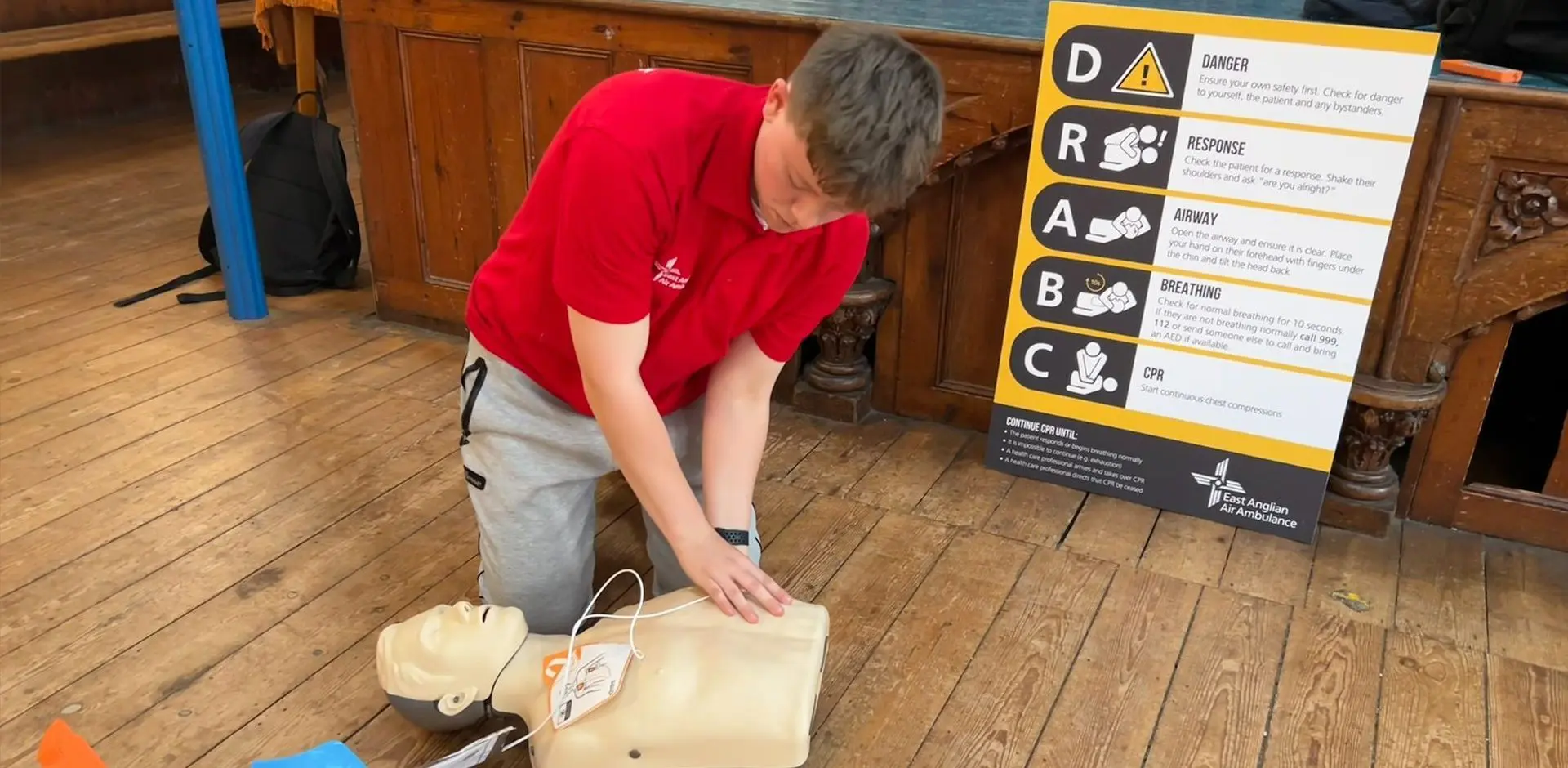
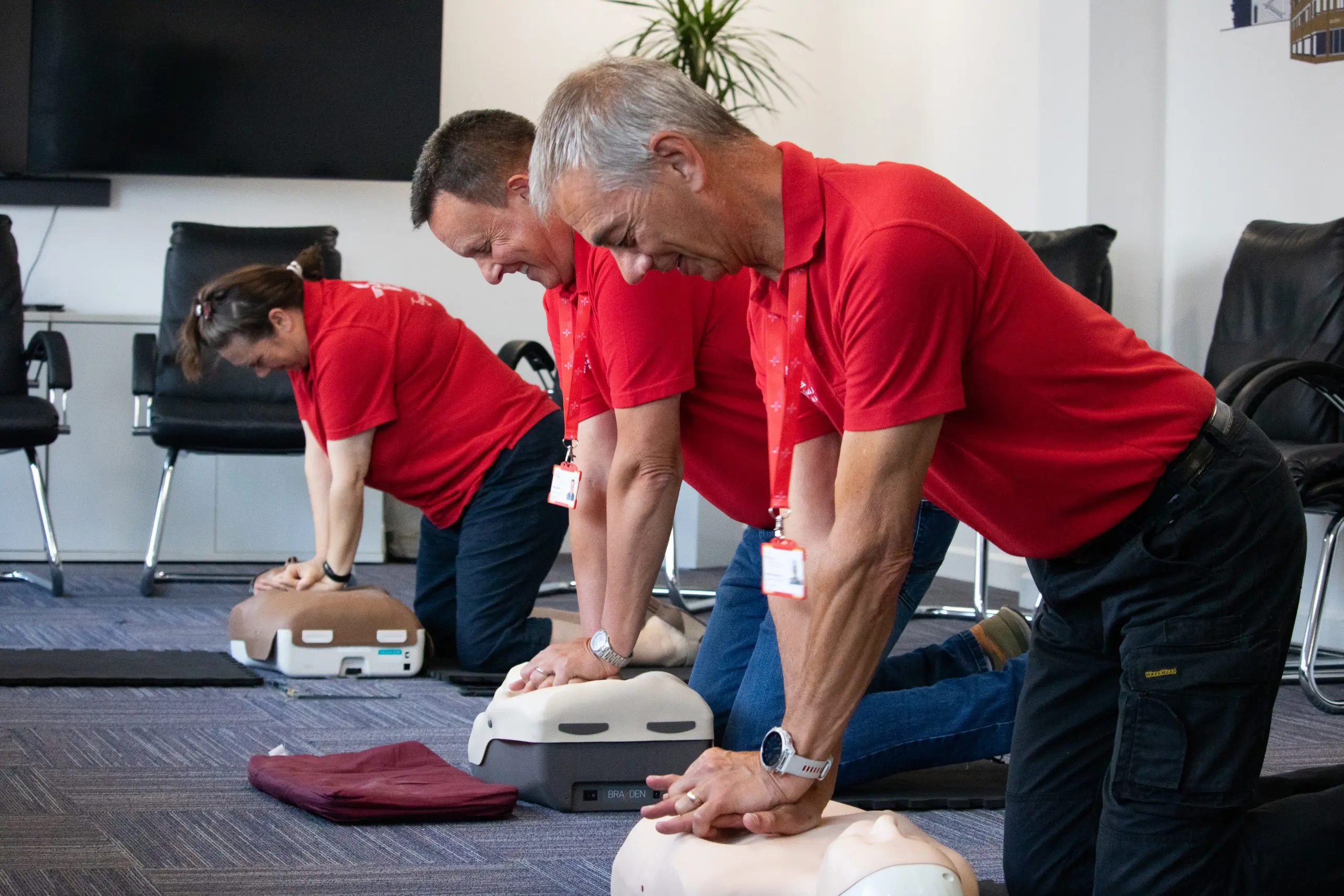
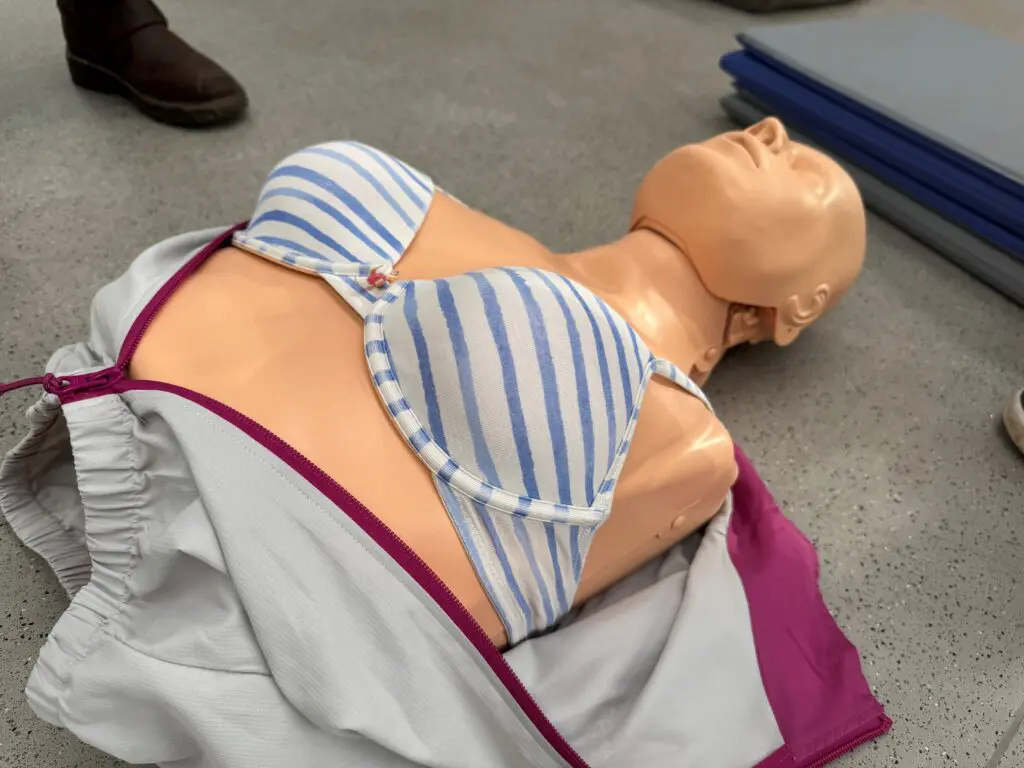
We introduced six female training manikins into our Community CPR Training sessions to help break down these social and psychological barriers and to encourage honest and positive conversations. By practicing chest compressions and placing AED (Automated External Defibrillator, or ‘Defib’) pads on a female form, the attendees of our sessions can move past any awkwardness they may feel and gain the confidence to act in an emergency.
Our training teaches a simple, lifesaving truth: In a cardiac arrest survival is the priority, however there are ways to provide dignity to a patient, such as placing clothing back over the top of the patient once defibrillator pads are in place.
We instruct participants to remove the bra to ensure defib pads are placed correctly and can deliver an effective shock to try to reset the patient’s heart. This is important because bras can sometimes be a barrier between the defib pads and the person. By removing the bra and applying the defibrillator within the first three minutes, survival rates can increase by up to 40%-70%, so we want to reinforce that it is okay to ‘lose the bra’ to save a life.
Remember: CPR doesn’t change based on gender. Removing clothing is not necessary to perform CPR unless restrictive. Don’t let uncertainty or a taboo stop you from stepping in to help – saving a life is always the priority.
The SARAH Act
One of the biggest hurdles is the worry over ‘explicit consent’ or the legal risk of removing a bra. The SARAH Act (Social Action, Responsibility and Heroism Act 2015) in the UK aims to protect individuals who provide first aid in emergencies. It provides legal reassurance that people cannot be sued for acting responsibly and heroically in such situations. (Social Action, Responsibility and Heroism Act 2015)
Every second counts
By making the female form a normal part of our training, we are making sure that everyone, no matter their gender, receives an equal chance of survival.
Let’s lose the stigma and save lives together. Learn more about our training courses and build your CPR and defibrillator confidence.
Related News