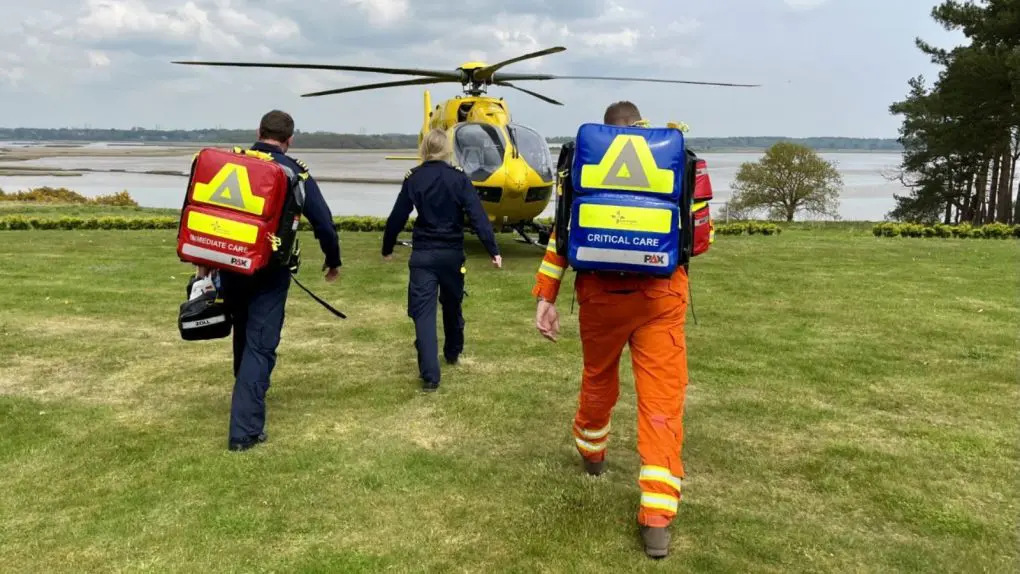
To mark International Pilots Day on 26 April, we spoke to Captain Eduardo Prato, Babcock International Group (Babcock) pilot with our Anglia Two (Cambridge) crew, about the unique sounds of a shift with East Anglian Air Ambulance.
It’s a role where you need to be at the top of your game. One where skills, awareness and safety are everything. We’ve previously shared insights into what our pilots, doctors and paramedics need to look out for when lifting and landing the helicopter; being alert to potential hazards, the downwash, shape, size and slope of their landing area, but we rarely explore what they hear. Until now.
Inside the crew room
“When I arrive on shift at Cambridge, I greet the rest of the crew, my co-pilot and a doctor and paramedic. We’re a close-knit team and the welcome is always warm. There’s the initial chatter that you might expect; sometimes I haven’t seen these crew members for a few weeks due to shift rotas, other times I may have seen them yesterday. But we snap back into a team immediately because that’s what we do, that’s how we work. The chat soon gives way to quiet while we all concentrate on the essential elements at the start of every shift. I’ll often hear a gentle tap of fingers on laptop keyboards as the doctor and paramedic log on, and it’s occasionally punctuated by somebody making a tea or coffee, with the clicks of a teaspoon stirring in a mug.”
Aircraft checks
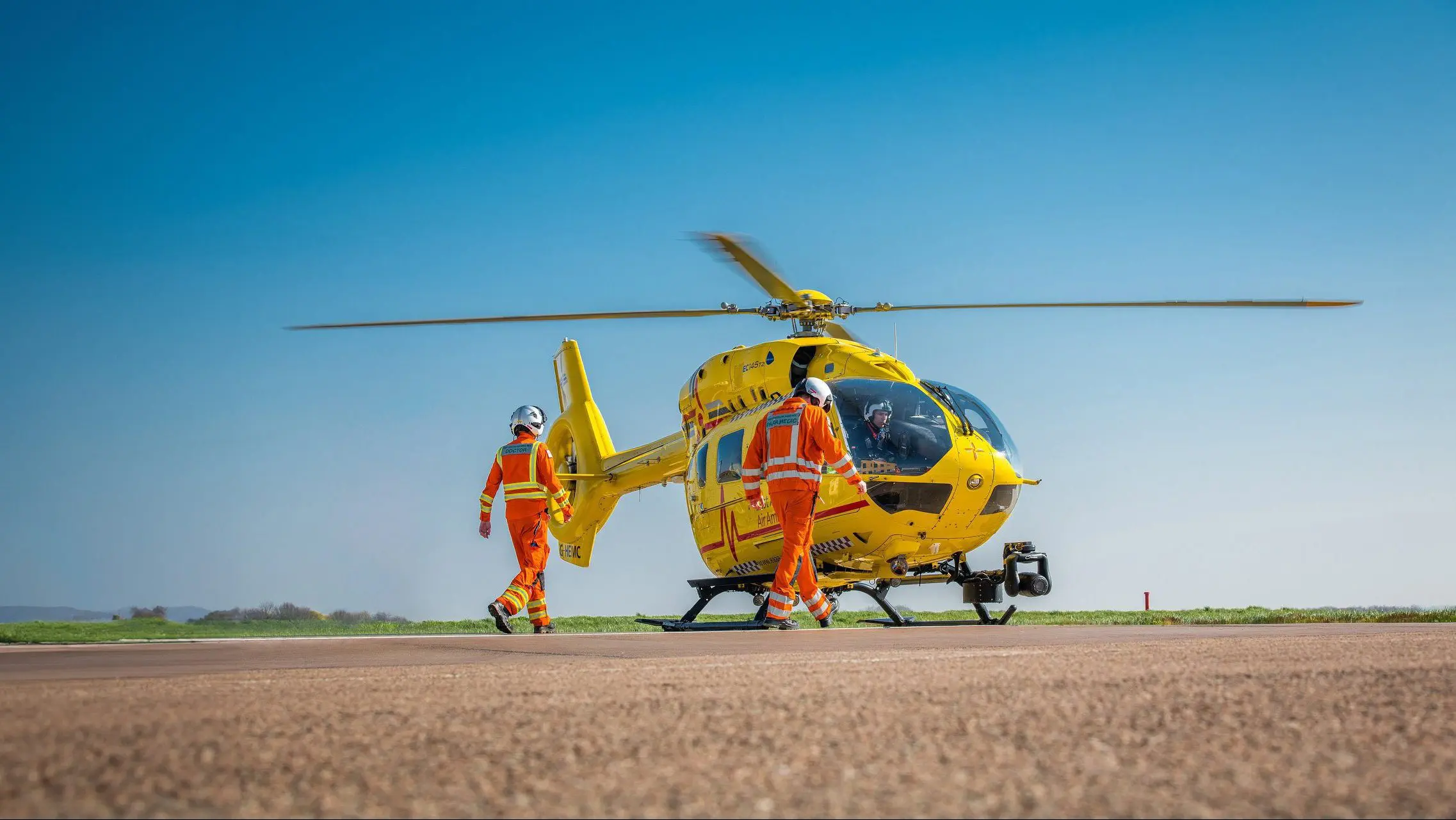
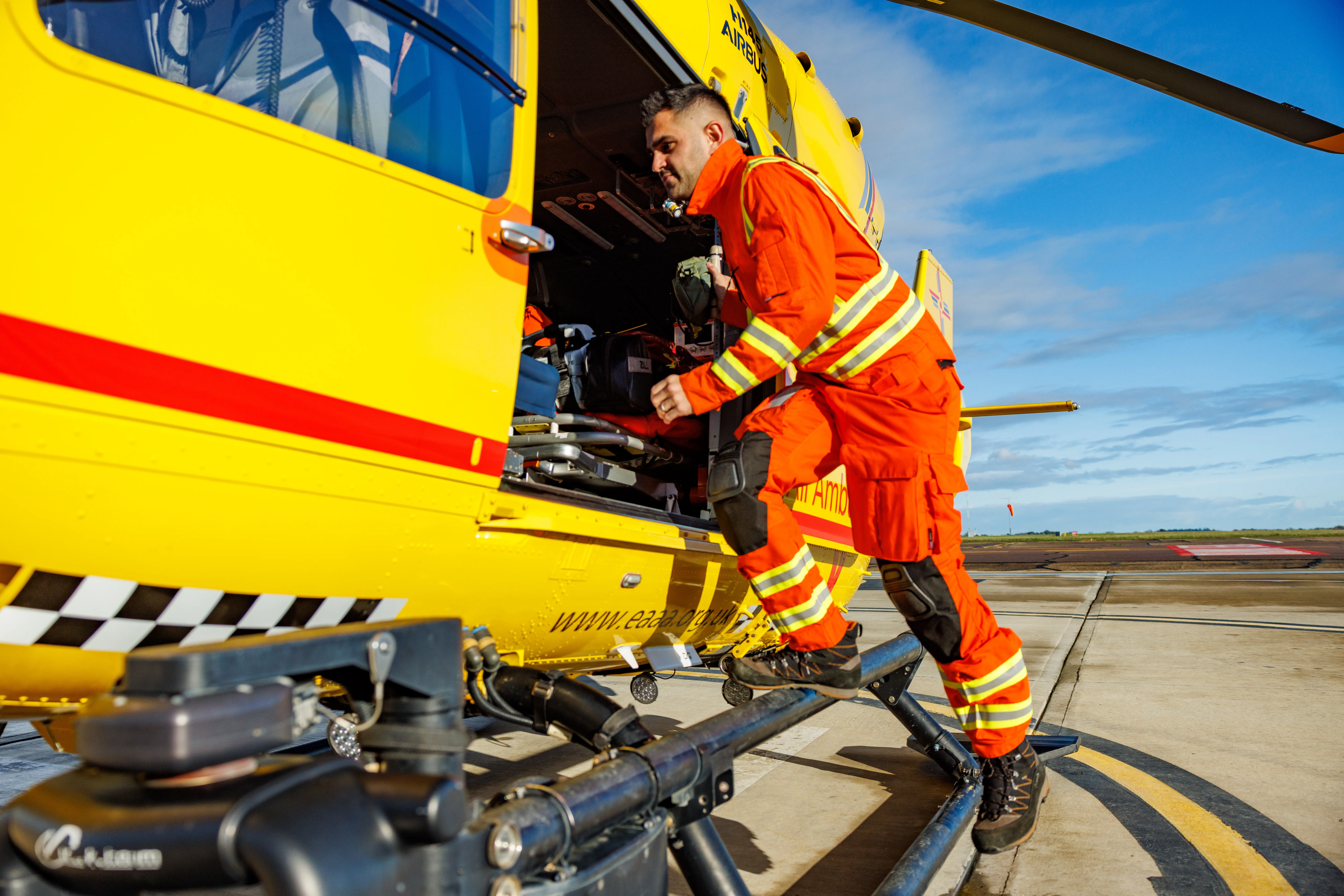
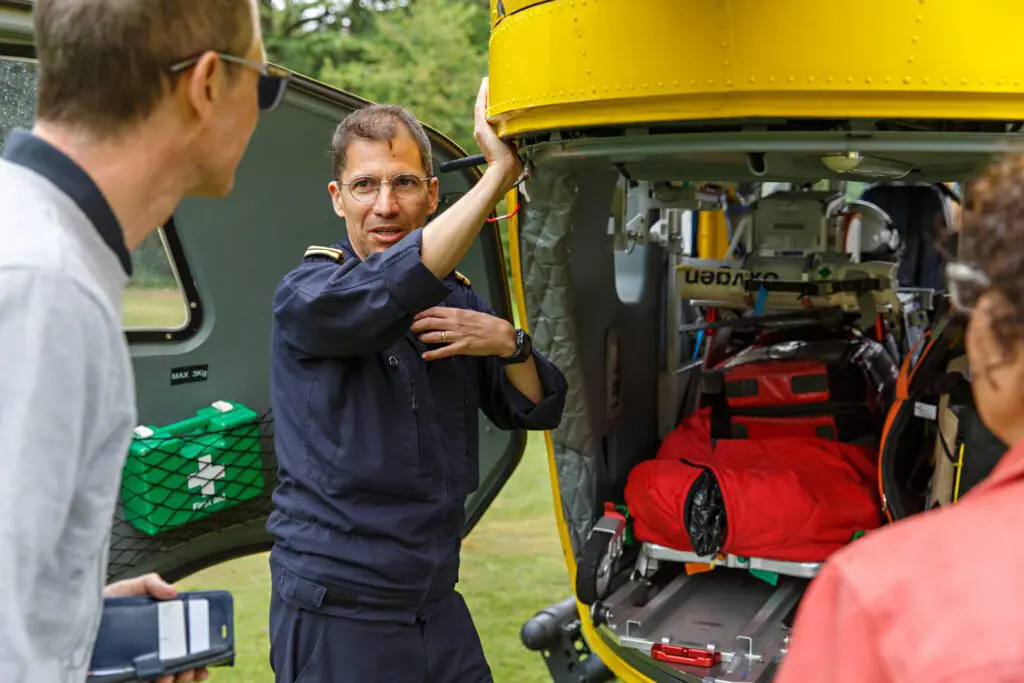
“The first job of the day for pilots is to check the aircraft. The airfield is usually quiet at the start of a shift; we might hear the wind and the distant noise of traffic from the nearby roads as commuters make their way towards Cambridge. There will be the smooth sound of the large hangar door rolling up so we can gently pull the helicopter onto the helipad using a piece of equipment called a Helilift – a hydraulic piece of equipment to move the helicopter quickly, easily and safely. Then we’ll methodically run through our checklist. There will be the clicks of locks and the sliding of cabin doors as every detail is checked thoroughly.
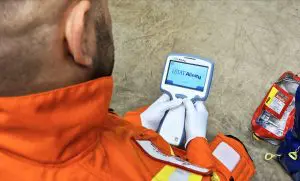
“While we’re doing this, the clinical crew check their kit bags. They run through their own checklists, calmly, methodically but never complacently because these bags contain the equipment and medication that somebody’s life today will depend on.
“Back on the helipad, when I’m in the cockpit and the helicopter engine is switched on, I’ll hear the rotors above me. Once myself and my co-pilot for the shift have completed our system checks, we’ll have ten minutes together, talking pilot to pilot, to confirm our checks and make sure we agree the aircraft is safe to fly. We’ll then inform the clinical members of the crew that the aircraft is online, which means it’s ready for taskings, and we’ll have a full crew briefing where we check we’re all fit and well for the shift, talk about plans for the day, weather forecast and how that might affect tasking by air, and anything else we all need to be aware of.
“Then we’ll concentrate on paperwork, and the quiet returns while we wait for the phone to ring telling us that we’re needed.”
When we’re tasked
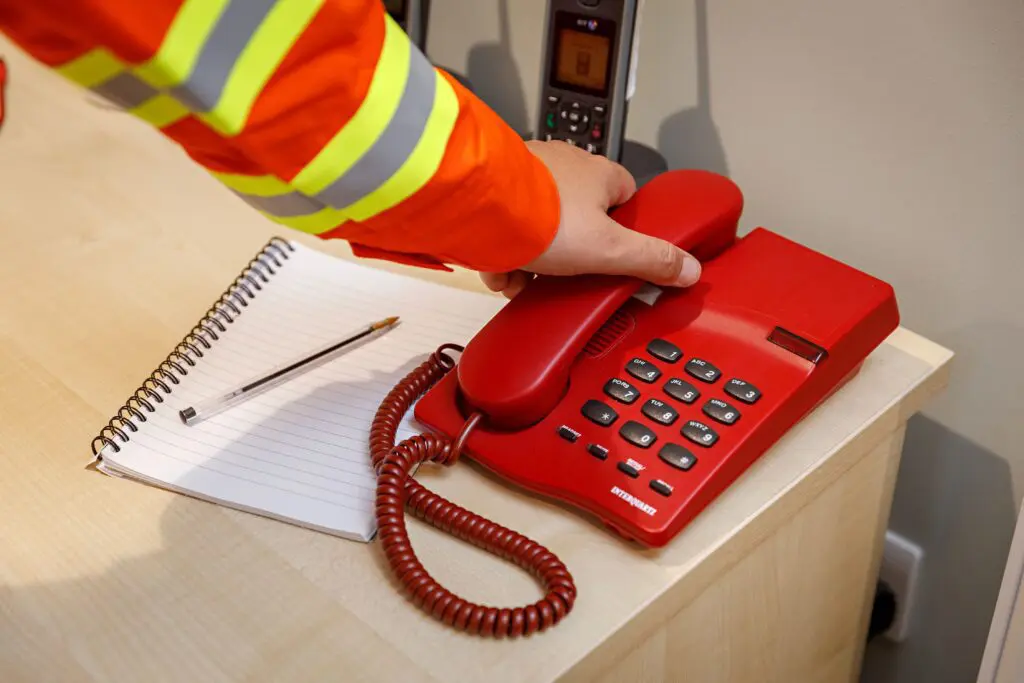
“The red phone ringing cuts through everything and we all stop what we’re doing. From the crew room to the office, to the base meeting rooms, we hear it throughout the building – and that’s deliberate. It’s not just something that readies us, alerts us, activates us. It’s a stark reminder for everybody in the base at that moment that someone’s day has just been turned upside down.
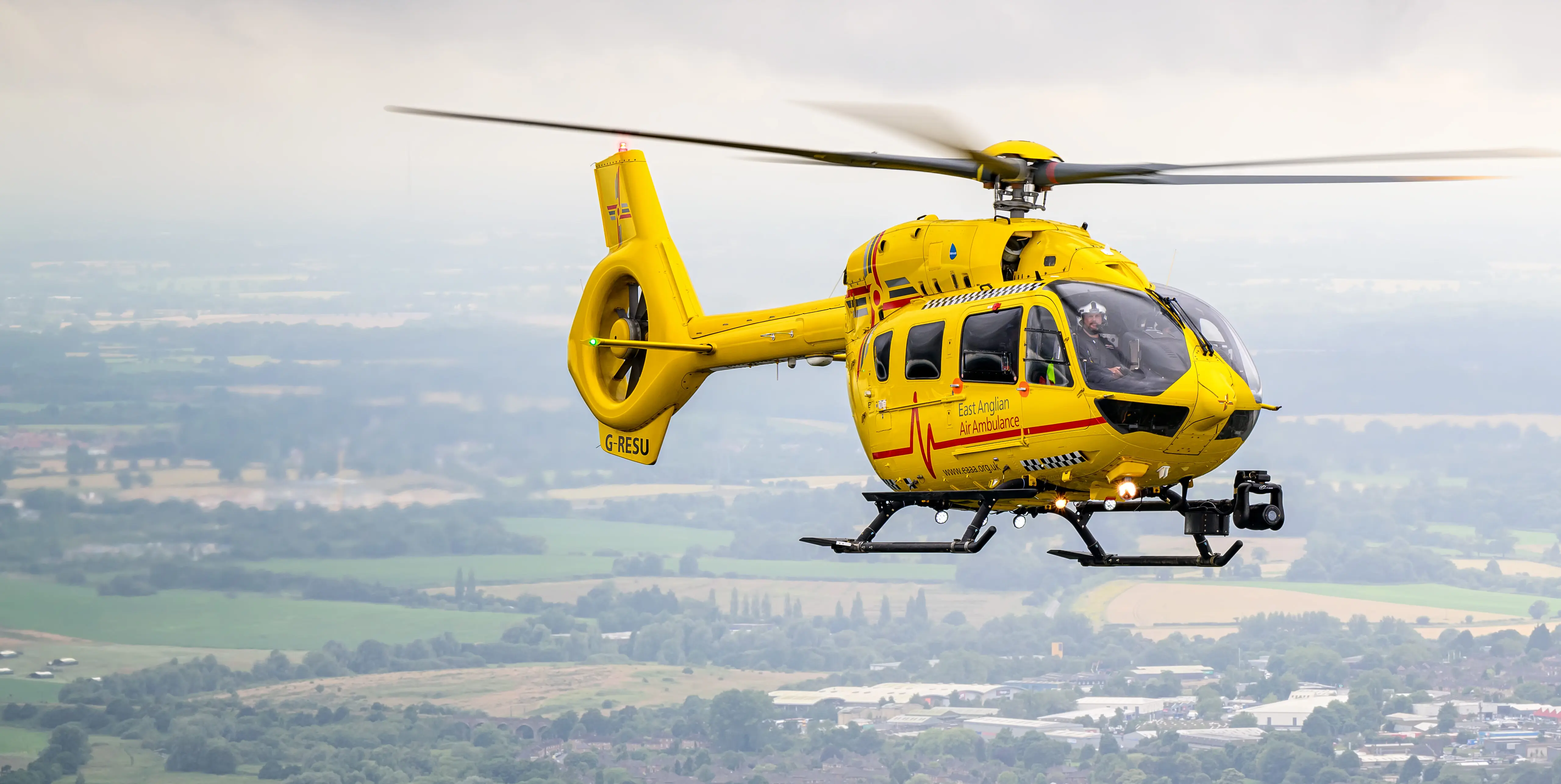
“I’ll hear a member of the clinical team on the telephone taking the details of the emergency – a cardiac arrest, an accidental injury, a road collision – and a grid reference of the location. I’ll check our iPad for the maps, airspace, terrain, powerlines and other hazards, as well as potential landing sites. In the meantime, my co-pilot will start the helicopter so we can lift in the fastest time possible. The H145 helicopter is quieter and smoother than some other aircraft. There are different frequencies when the engines start and the rotors turn; the engines and gear box make distinctive high frequency sounds, the main rotor produces a low frequency sound, while the tail rotor’s one is is a bit higher. As we lift, these sounds also become vibrations that we feel in our bodies.
“We have a sterile cockpit while we’re lifting; this means only aviation matters are discussed during this critical time. In our headsets, we’ll hear the constant voices of air traffic control. We also pay attention for our callsign, ‘Helimed 88 Alpha’ if we’re on our way to an emergency tasking – this gives us priority in the airspace – and ‘Helimed 88 Echo’ if we’re returning to base.
“Once we’ve lifted, the clinical crew will have meaningful conversations about the task, the details they know so far and their plan for when they reach the patient’s side. We can isolate these communications in our intercom system, so the doctor and paramedic can have their conversations, and we, the pilots, can have ours. It’s like being in separate rooms while we concentrate on our specific roles, but we can talk to each other again at the flick of a switch.”
Landing
“The RPMs of the engine increase as we come into land; we need high power to hover. As we monitor the engine parameters in our cockpit displays, we get the familiar increase in frequency of the engine’s sounds as we approach our chosen landing site, which is the safest site but not necessarily the closest. When we land and we are satisfied that it is safe, we let the medical crew leave the aircraft so that they can head straight to the scene where they are so needed. The engines are shut down and the sounds that we have had throughout the flight come to an end. The rotor blades take a little while longer to stop, they slow down methodically and the sound becomes deeper until it stops.
“Other sounds we’ll hear after we have landed include the conversations of the emergency services, the handover to our crew, and checklists that are carried out – more moments when communication and paying attention are everything.”
Back at base
“It’s always special when former patients and their families visit us in the weeks or months following their incident. When we’re back at base, we sometimes have the opportunity to meet some of these very special visitors again, but this time in much better circumstances, during base visits organised by East Anglian Air Ambulance’s Aftercare team.
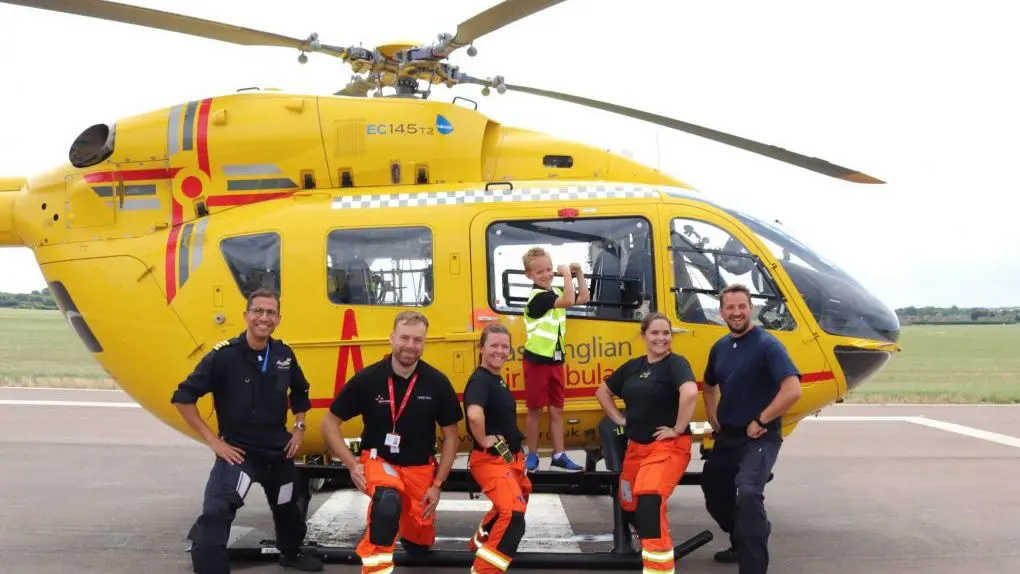
“These meetings can support the ongoing recovery journeys of our former patients, and they remind us why we do the role we do, and of the vital, lifesaving impact of the public. We can’t thank you enough for your kind donations and support because this powers the helicopter rotor blades we hear on every shift, it funds the lifesaving equipment and medication we carry to every incident, and it drives the teamwork, conversations and interactions of the crew at each emergency we’re called to. Without you, everything would be silent.”
Related News