Part of the Anglia Two (Cambridge) crew with East Anglian Air Ambulance, Dr James Price is an Adult and Paediatric Emergency Consultant at Addenbrooke’s Hospital and serves as East Anglian Air Ambulance’s Consultant in Research & Development within our academic department, RAID. This National Doctors’ Day, he shares a unique look behind the scenes of his role and what inspired him to work in pre-hospital emergency medicine.
A shift in focus, which changed everything
When I was at school, I really wanted to be a vet and worked at gaining experience in this field. At the last minute, before applying for university, I changed my mind and gained a place at medical school. I studied at Imperial College in London and graduated in 2014.
I did my resident training at the Royal Surrey County Hospital, which is where I met my wife when we were both junior doctors. I also worked at St George’s Hospital, London in the emergency department and trauma centre – that’s where, combined with placements at London’s Air Ambulance, I was inspired by pre-hospital emergency medicine
After moving to Cambridge in 2016 and continuing my training at several hospitals across the East of England, I sub-specialised in children’s emergency medicine. I joined East Anglian Air Ambulance in 2018, first as a PHEM trainee, and now part of the Consultant faculty and Research & Development Lead within the charity’s Research Innovation, Audit and Development (RAID) group.
A responsibility I don’t take lightly
Being able to treat acutely unwell and injured people in our region in the initial phases of care – where minutes really do count – is a privilege. As an air ambulance crew, we put all our focus and expertise on that one patient, which means we really can give each person the very best care in some of the worst moments of their lives.
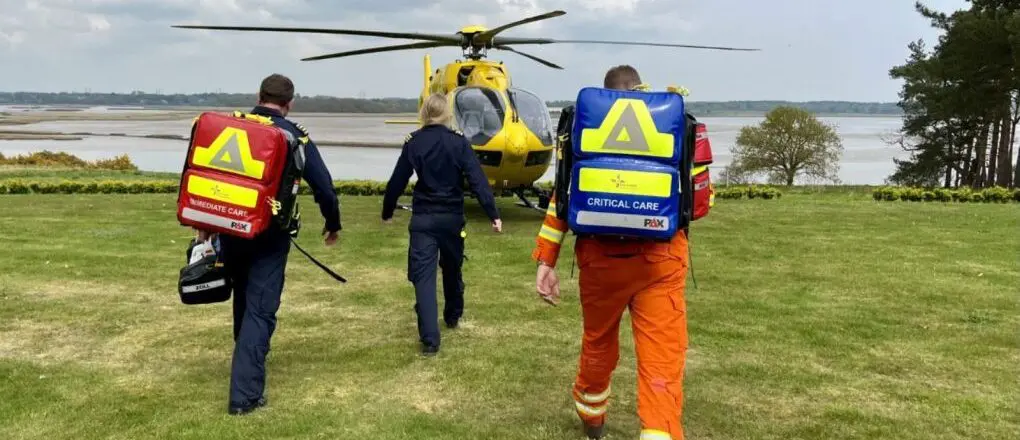
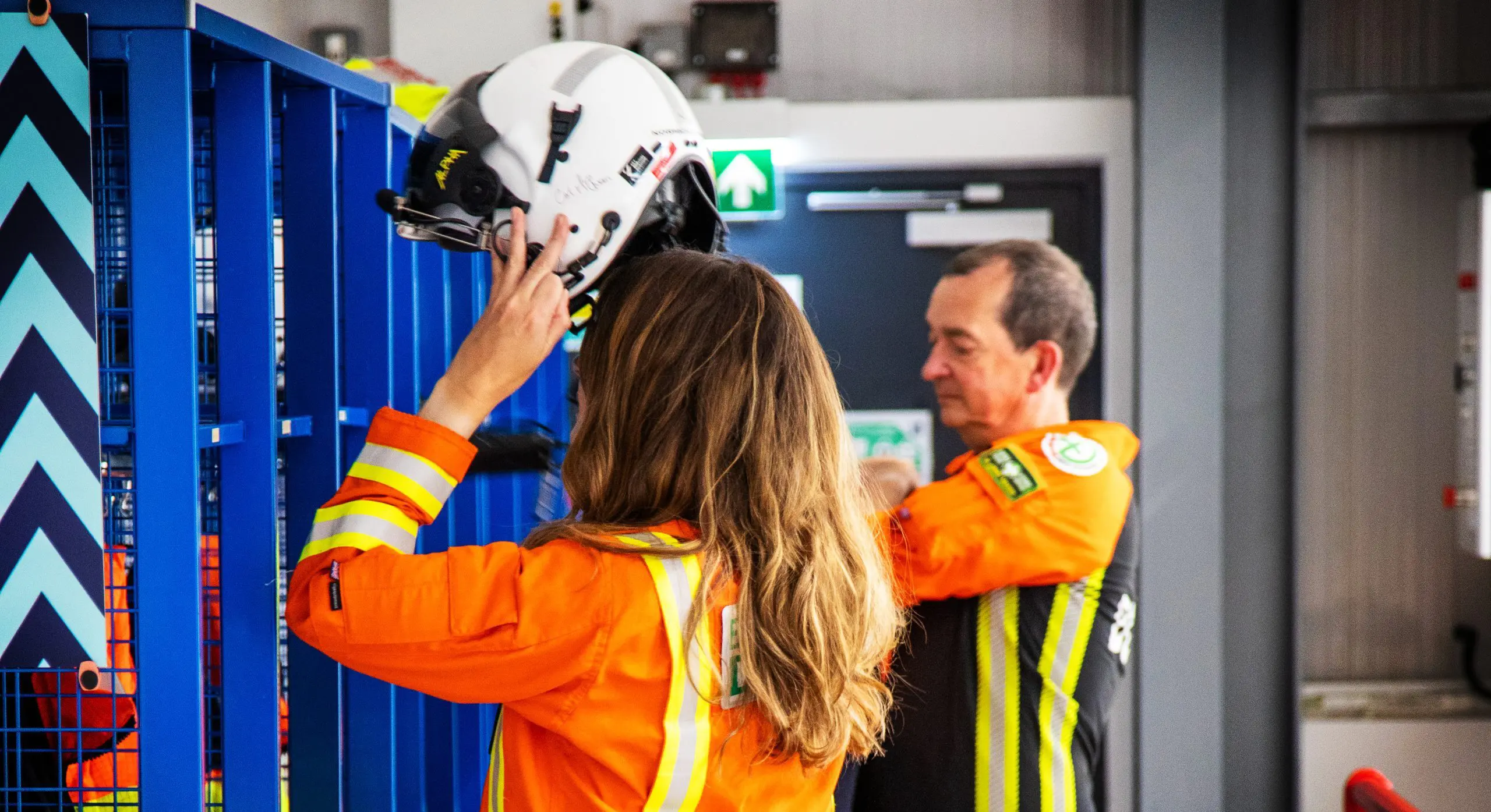
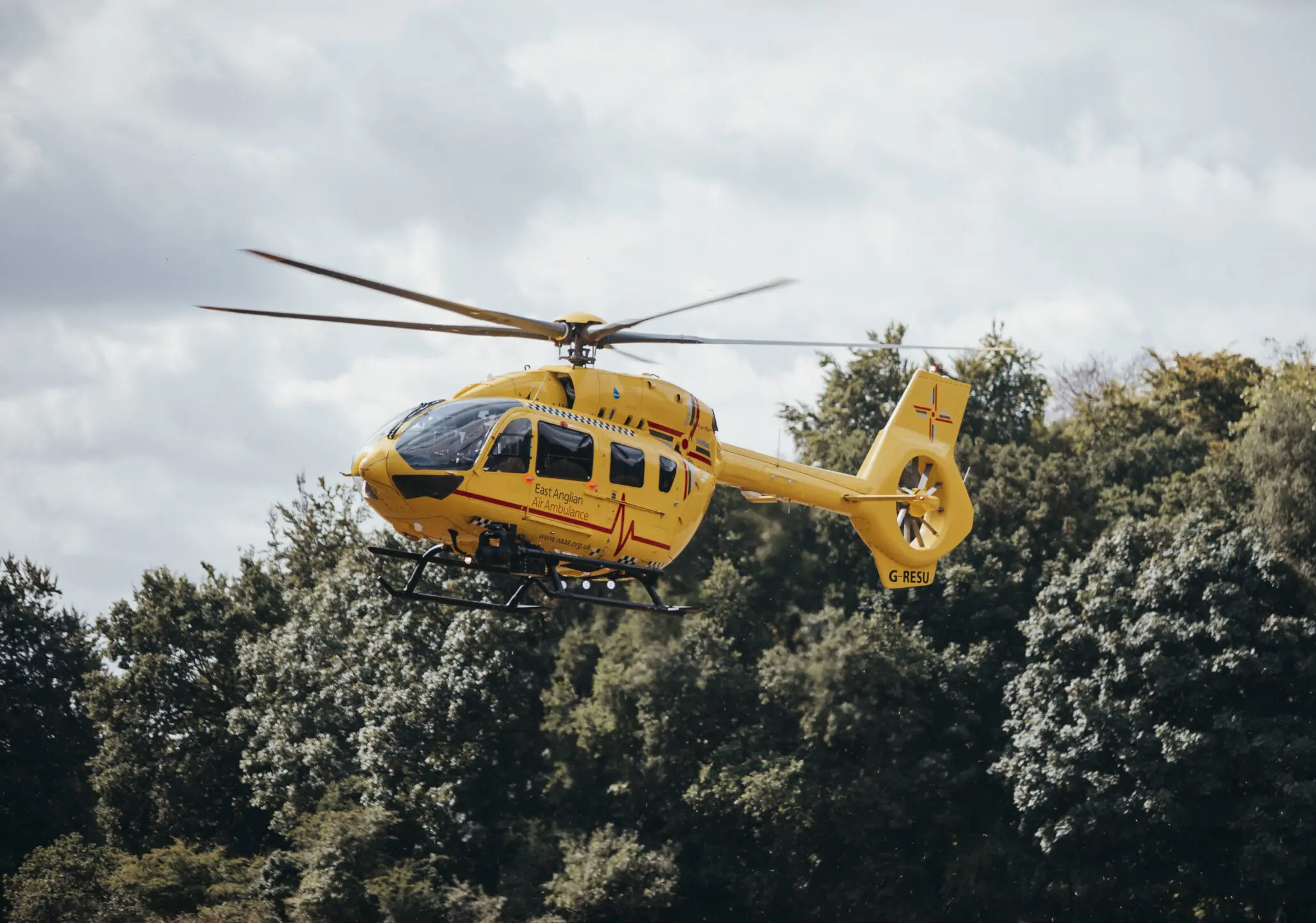
We’re a 24/7 service. We bring critical care – advanced skills, equipment and medication – directly to the scene of the medical emergency and respond to the most serious 1% of 999 calls received by the ambulance service. Each shift has two pilots, and at least one doctor and one critical care paramedic. There’s no such thing as a typical shift. We come in, take over from the previous crew, start our daily checks and make sure the helicopter and critical care cars are ready for whenever the phone rings. Some days are quiet, while others we have back-to-back jobs. Our pilots are great at bringing us snacks and coffee when we need it!
The first time I flew in the helicopter I was quite nervous – I had never flown in one before. I still get a buzz by the noise of the aircraft when it starts to lift. We don’t know who we’re flying to but, on the way to a patient, we’re always discussing the tasking, what resources we’ll need, receiving updated information from our colleagues on the critical care desk and how we will work as a team to help the person who needs us.
We work closely with other emergency services in the area, and we get to know those teams really well. We come together and work together for the same objective: to help somebody in urgent need.
The role of research
On joining East Anglian Air Ambulance, the value of integrating research into clinical practice was recognised, leading to the establishment of the charity’s RAID group by a team of like-minded clinicians. Since its inception, RAID has developed into a formal department with an appointed academic lead, using data and insights to drive innovation, education, research, and best practice across the sector. We have built international collaborations with world-leading teams and experts, and that’s pretty amazing.
The group began by evaluating data for out of hospital cardiac arrest patients; these emergencies are around 30% of the people we attend every year. We started analysing data and insights because we always want to do better for our next patient. Over time, RAID has developed significantly, with growing recognition that research and audit is the cornerstone to our work; to improve and innovate so East Anglian Air Ambulance can continue to play a leading role in shaping UK and international thinking in pre-hospital emergency medicine
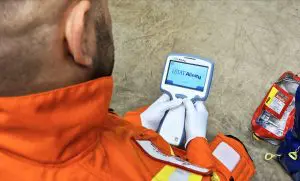
We’re a rural region, with one major trauma centre, so it’s important to get patients to the right hospital, at the right time. RAID looks at emerging technologies to support our mission. Take our BRAIN-FIRST project for example. We were the first team in the world to use a minimally invasive blood test at scene for patients with a suspected head injury to help determine if they are suffering from bleeding in the brain, so we can take these patients to specialist centres straight away. The results so far are fascinating, and it’s been made possible thanks to generous funding from Tony and Maggie Abel from Abel Homes.
We now have rich and high-quality datasets, which we use to support research and innovation in a wide range of medical emergencies, including brain injuries, trauma and cardiac arrests. Our work is attracting industry collaborations in the UK and abroad. It’s truly amazing to see East Anglian Air Ambulance from our small part of the world recognised around the globe – and it’s incredibly humbling to be a part of it.
Throughout, some things have remained constant. Our patients, their families and communities are our motivation and always will be, and our donors and supporters make everything we do possible. We never forget this.
Rewarding moments
In February, we were invited to speak at a prestigious pre-hospital conference in Switzerland. Discussing and seeing our scientific papers and research shared at conferences on the international stage is phenomenal, and it’s another reminder that it’s only possible because of the people, like you, who stand beside us. Your donations, lottery plays, volunteering hours, fundraising efforts all contribute to bringing somebody the very best care when the very worst happens – both at home, and internationally.
Our donors and supporters make everything we do possible, and we never lose sight of that. There are days when, despite all our skills and everything we bring to an emergency, the outcome for a patient and their family just isn’t fair. That drives me every single day.
But there are also moments that lift us – like seeing a seriously injured child smile again because we’ve taken away their pain, or meeting someone you never thought you’d see walk through the door, yet they do. We work for more moments like these and, with you by our side, they are possible.
Related News