Picture this: it’s a cold, dark winter night. A bitterly cold wind is biting, and the drizzle quickly turns into heavy rain.
Now imagine working outside in those conditions – not just working but trying to save someone’s life. That’s the reality for our crews during the winter months. But for them, the weather doesn’t matter. What matters is being there in that critical moment, ready to help. And that’s exactly what they’re trained to do – 24/7, whatever the season, whatever the weather.
We’ve taken a dive behind the scenes of what happens in winter, and our crew is tasked to a seriously unwell or injured patient outdoors when the weather is bleak.
Our helicopters and cars
It’s not fun trying to de-ice your car in the morning before work, and we feel the same way about de-icing a helicopter. However, there are also a number of safety reasons why we keep our aircraft in the hangar during freezing temperatures. These include to avoid a build-up of frost and ice on the rotor blades and skids, and ensuring our medical and night vision equipment, some which is temperature sensitive, is operational and ready to respond as quickly as our crew.
We can open the hangar door in seconds and can quickly and easily move the helicopter from hangar to helipad with the help of our ‘Helilift’ which is a hydraulic ground handling device. Once the airport has closed and in freezing conditions, the pilots spread ‘Clearway’ anti icing granules around the helipad and the path from the hangar. This ensures ice doesn’t form on the ground which can be hazardous to the crews and ensures the Helilift doesn’t lose traction while transporting the helicopter. If there is heavy snowfall, airport staff will clear snow from the runway and aircraft manoeuvring areas.
The crews have to keep a close eye on the helicopter if it has landed in a remote location in freezing conditions. It is not permitted to fly if any ice has formed on the surfaces. If ice does start to form, then the crews can conduct a ground run with the rotors running – a bit like running your car to clear the ice before the morning commute.
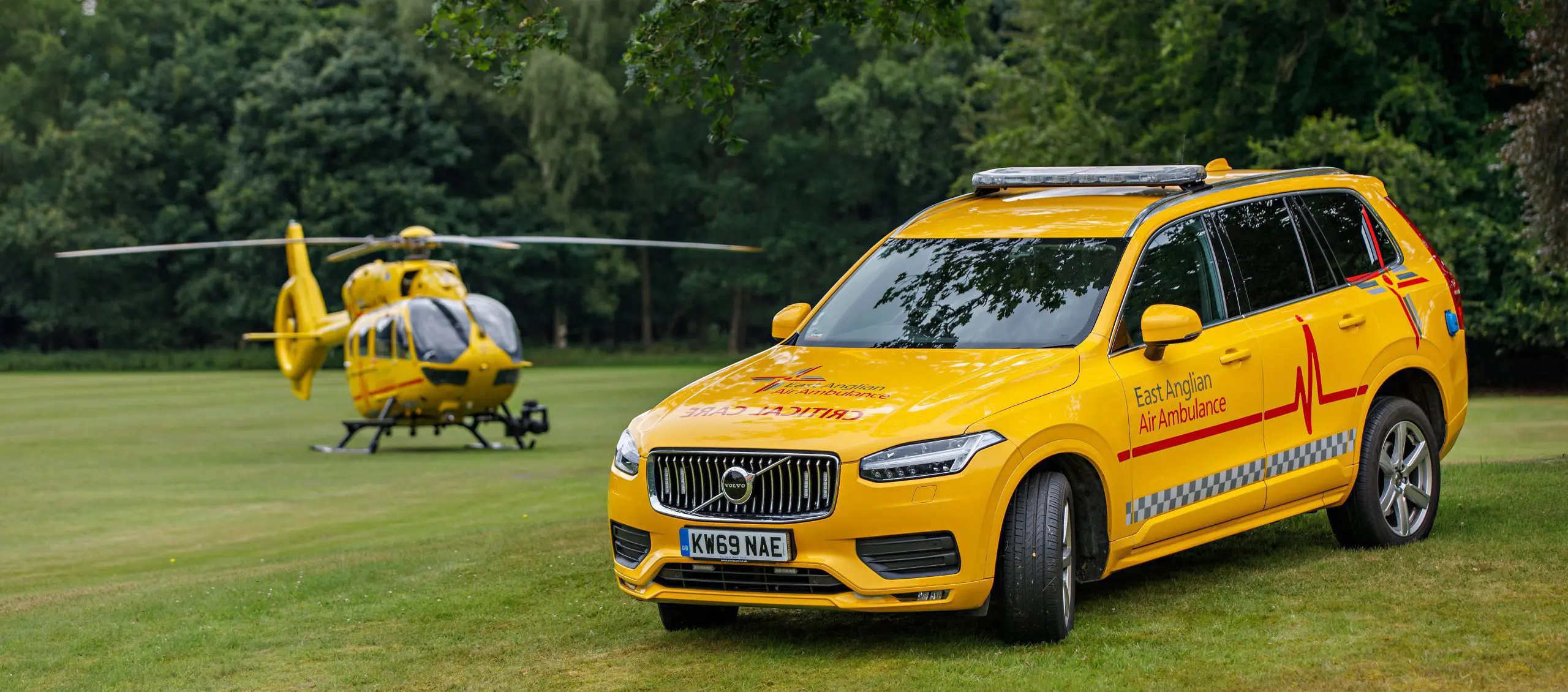
Our critical care cars provide resilience, allowing our crews to provide effective 24/7 cover, especially if the medical emergency is in a location where the helicopters cannot easily land, such as urban areas, or in the event of inclement weather when the conditions are out of legal flying limits. With the exception of a stretcher, the critical care cars are equipped with the same high standard of medical equipment and treatment options as the two helicopters.
Around the end of November, we change to winter tyres on the critical care cars because these perform better in wet and cold conditions., ready for the colder conditions is each car’s winter pack. This includes a heated steering wheel and seats, and a de-misting windscreen. Along with shelter from car ports or a garage, our doctors and paramedics won’t lose any time in getting to a critically injured or unwell patient through waiting for the screen to clear.
Night vision technology
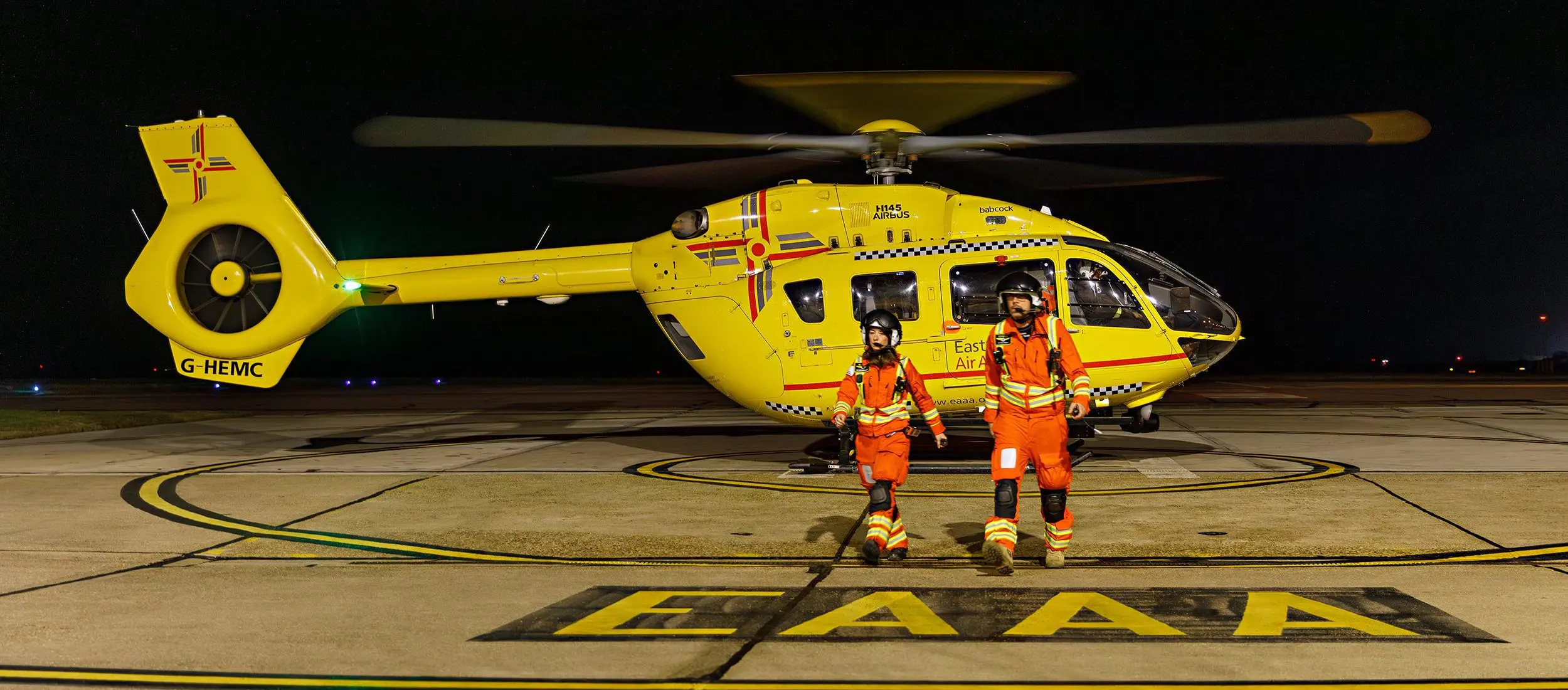
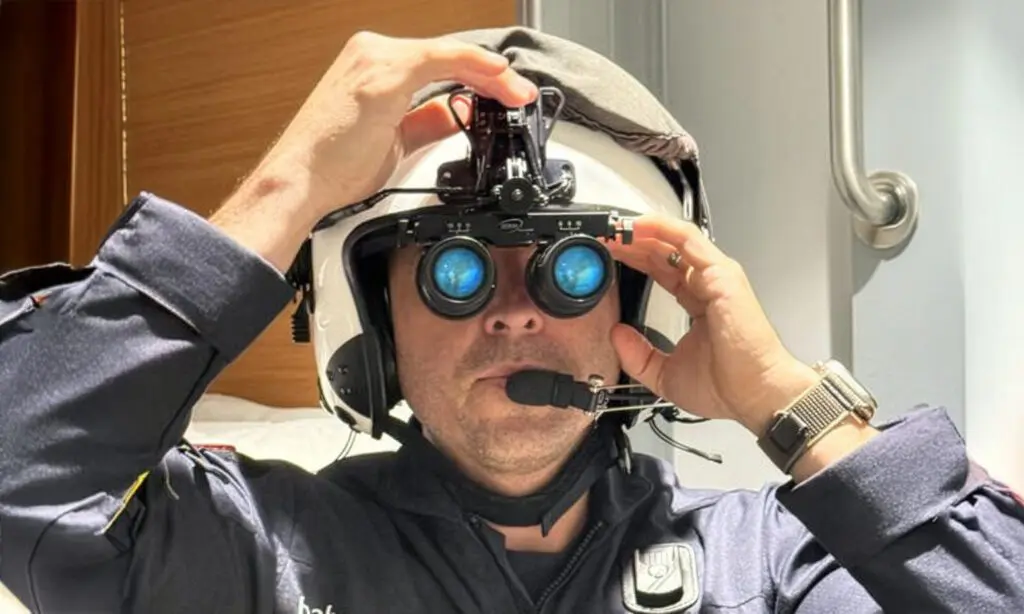
It’s not just used in the military. Our pilots use night vision equipment, which enable them to fly to patients during the hours of darkness. Night Vision Imaging System (NVIS) is a system that integrates all elements necessary to successfully and safely operate with Night Vision Goggles (NVGs). The system includes NVGs, NVIS compatible lighting and other components, such as the High Intensity Search Lights (HISL) on the aircraft.
NVGs are a binocular appliance that amplifies ambient light and is worn by flight crew. They amplify the light the crew would normally see, making obstacles much easier to identify. It differs from thermal imaging, which provides infrared images and less definition. When there is limited light, NVGs greatly enhance an image. This increases situational awareness for the crew. Clinicians in the rear of the aircraft use handheld night vision monoculars to further support the pilots during landings and take-off.
In additional to the night vision technology, you can’t beat a good head torch, which our clinicians will wear when attending patients outside at night, when they need extra light to help them. The Fire and Rescue Service are also excellent at providing additional lighting at scene.
Crew clothing
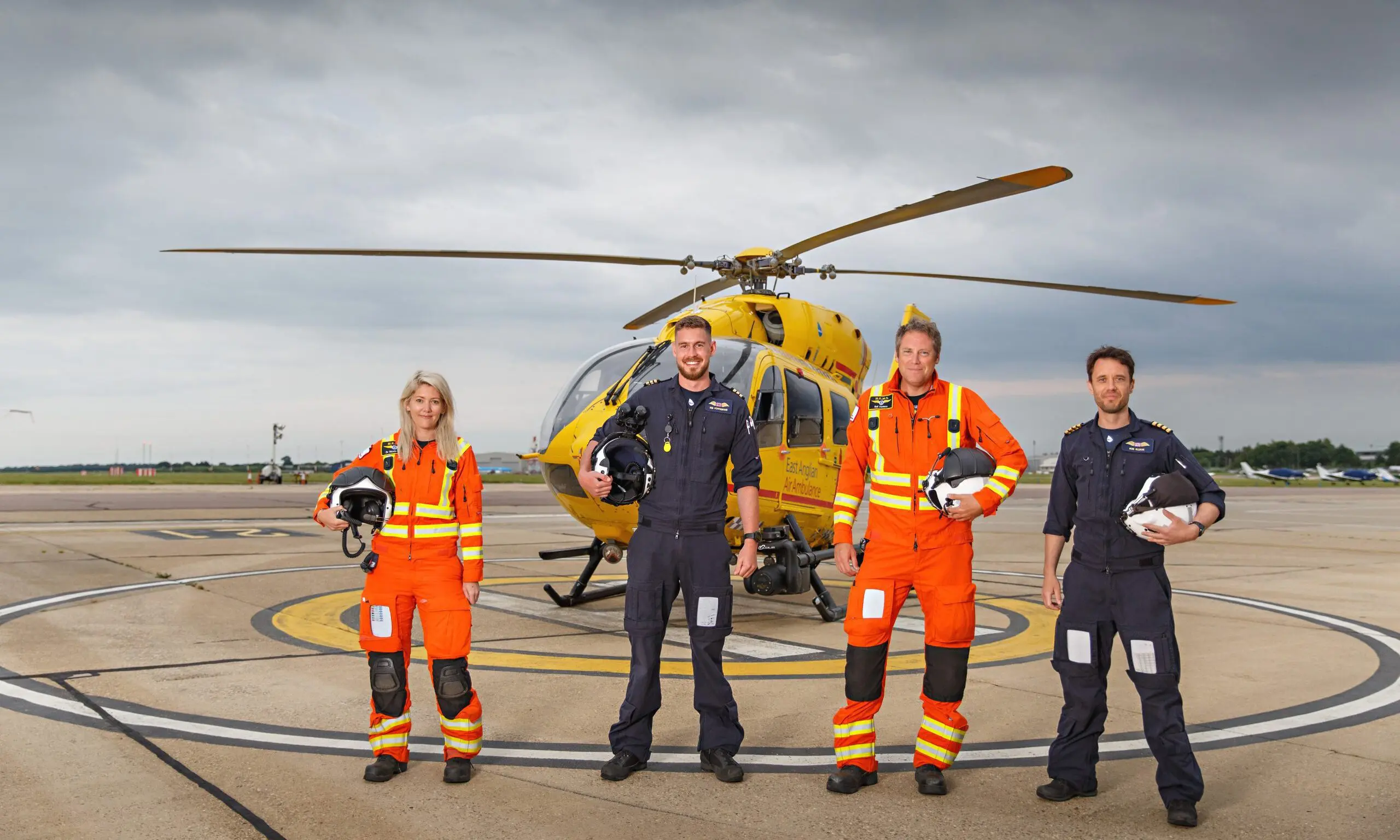
Just like people having a winter and summer wardrobe, so do our doctors and paramedics. When the colder weather arrives, the crew are winter ready with their winter weight flight suits, which are thicker to keep them warmer. They also have a range of base layer thermals too; from long sleeve, short sleeve, to fleeces and leggings, as well as jackets designed for different kinds of weather. We include a range to suit individual taste to ensure they are not too cold or too hot, however all clothing issued that is worn in the aircraft has to meet heat and flame retardant specifications in addition to providing warmth and comfort. There are plenty of spares too, so if the rain is heavy and the suits get wet, the crew can change into dry flight suits when they return to base, ready for the next emergency call.
The crews land in muddy fields on a regular basis during the winter months. In order to reduce the amount of mud in the helicopter the crews will don plastic overboots to try and contain the mess!
Keeping equipment toasty
Some of our lifesaving equipment needs to be kept at an ambient temperature. For example, our iStat machine, which is a handheld blood analyser providing diagnostic blood gas results in minutes, which will only work correctly within a certain temperature range, so it’s kept and carried in a special thermal pouch packed with heat pads that are changed each shift.
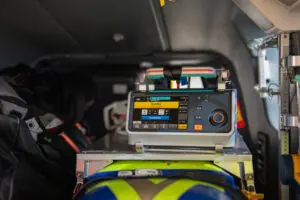
Our Zoll monitors are used at many incidents. They are brilliant pieces of equipment which can defibrillate patients in cardiac arrest, or with a life-threatening arrhythmia (irregular heartbeat), as well as on-going multi-modality monitoring of critically ill or injured patients. While they’re splashproof, the crew are careful to make sure not too much water gets to them.
Supported by others
We’re a vital partner to the emergency services, and it’s a relationship that works both ways because our colleagues from services, including the police, ambulance service and fire and rescue service, are there at the scene to support us too. For example, if there has been an accident on one of the region’s roads on a cold, wet night, both services are invaluable in helping us work effectively at the scene by providing lightning and tarpaulin for example.
Patients first
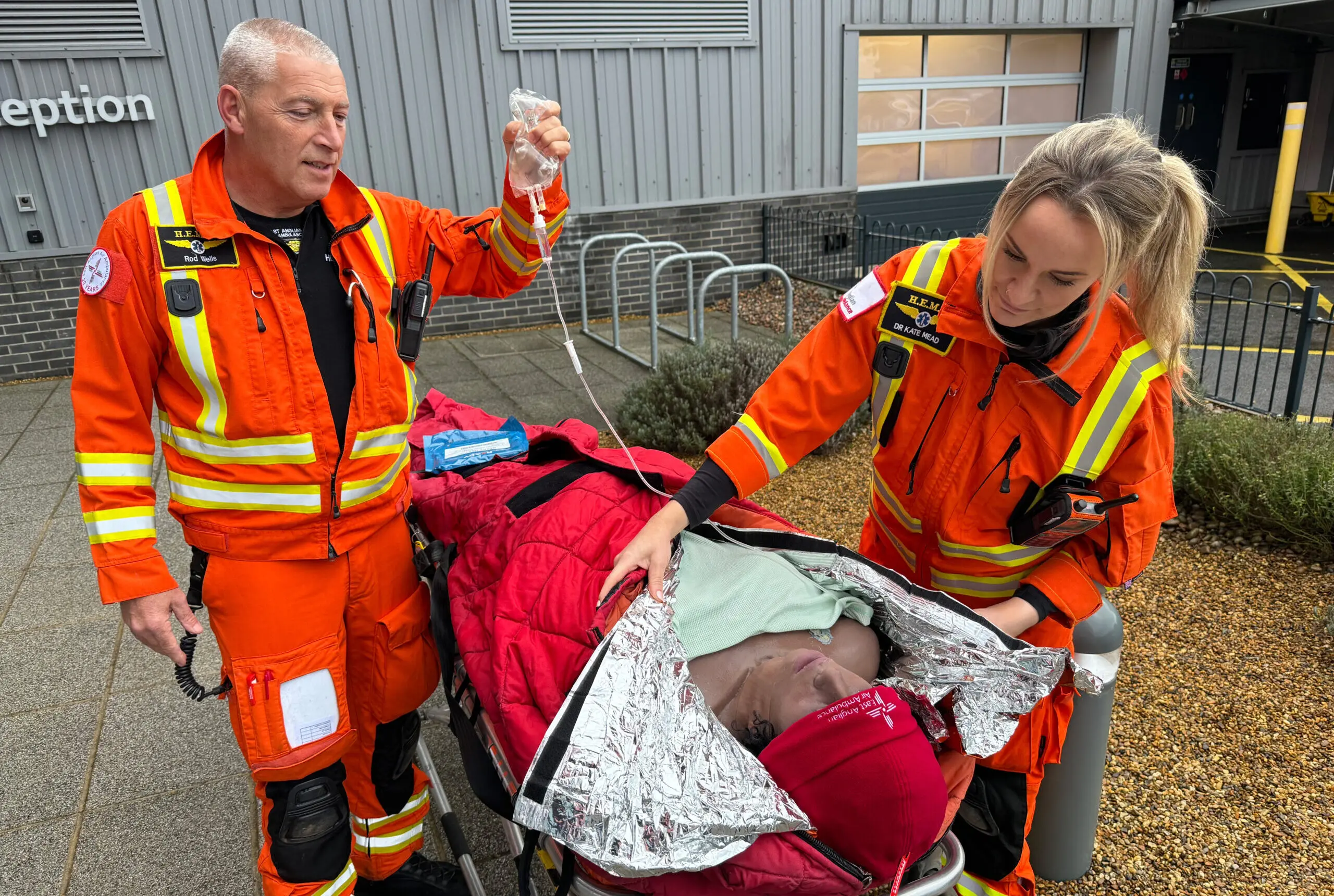
While the adrenaline of a tasking may keep the crew warm, at the forefront of their minds is the need to keep our patients warm, because the cold can cause real problems for critically unwell and injured people. Hypothermia could result in increased blood loss, the body’s ability to clot effectively is affected, and oxygen consumption is increased through shivering. It can also increase the rate of infection and risk of cardiac events – so it’s really important that we keep the patients we attend warm while we assess and treat them. This is where a MEQU machine is useful. This is a portable blood and intravenous fluid warmer designed to help prevent hypothermia in critically injured patients. It warms fluids to body temperature within seconds. This makes it especially valuable when treating trauma patients, those with severe bleeding, and people experiencing medical emergencies outside in colder weather.
Whatever the weather
We partner with the emergency services at the most serious of incidents. When someone needs us, it’s usually the worst moment of their life, and their family’s. That’s why our specialist doctors, critical care paramedics and pilots bring the advanced skills, equipment and medicine directly to a patient’s side in the fastest time possible – whatever the season, whatever the weather.
Related News