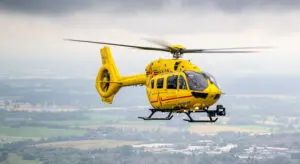
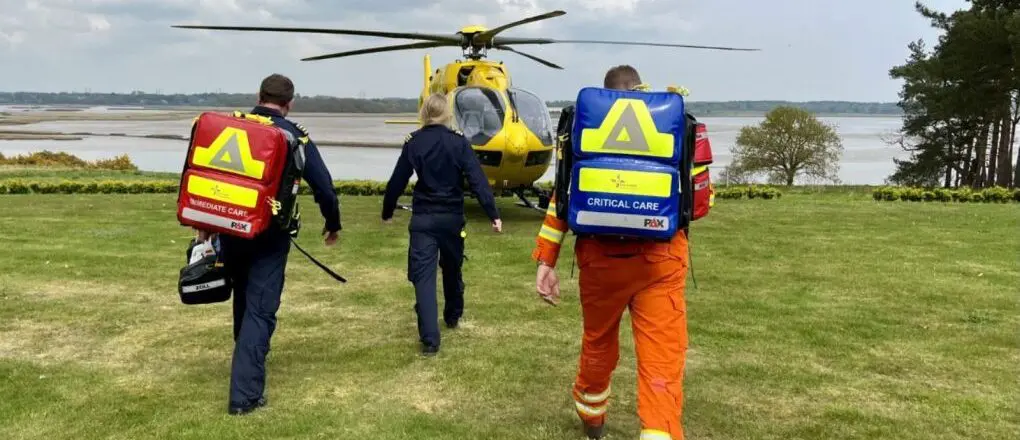
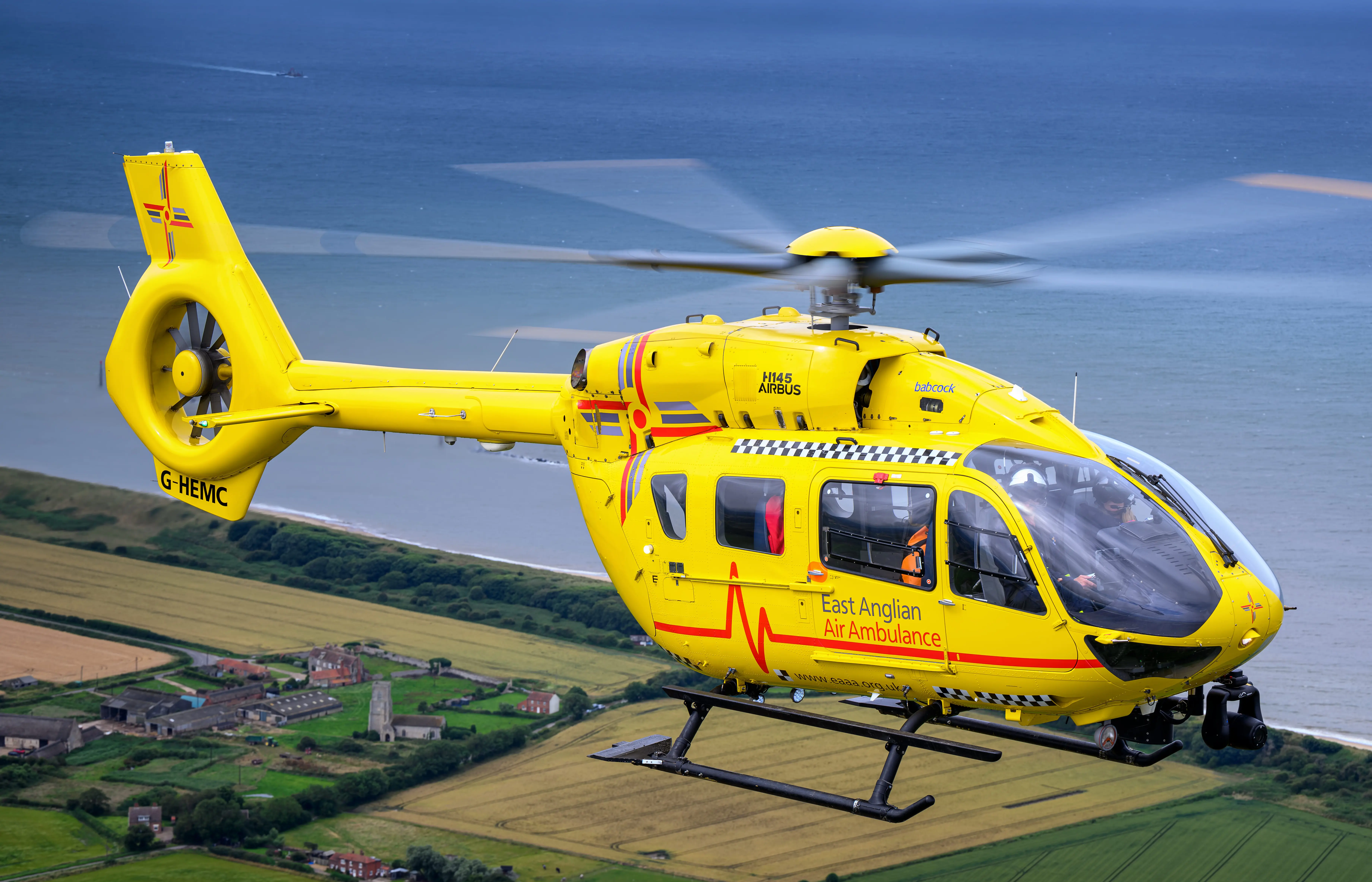
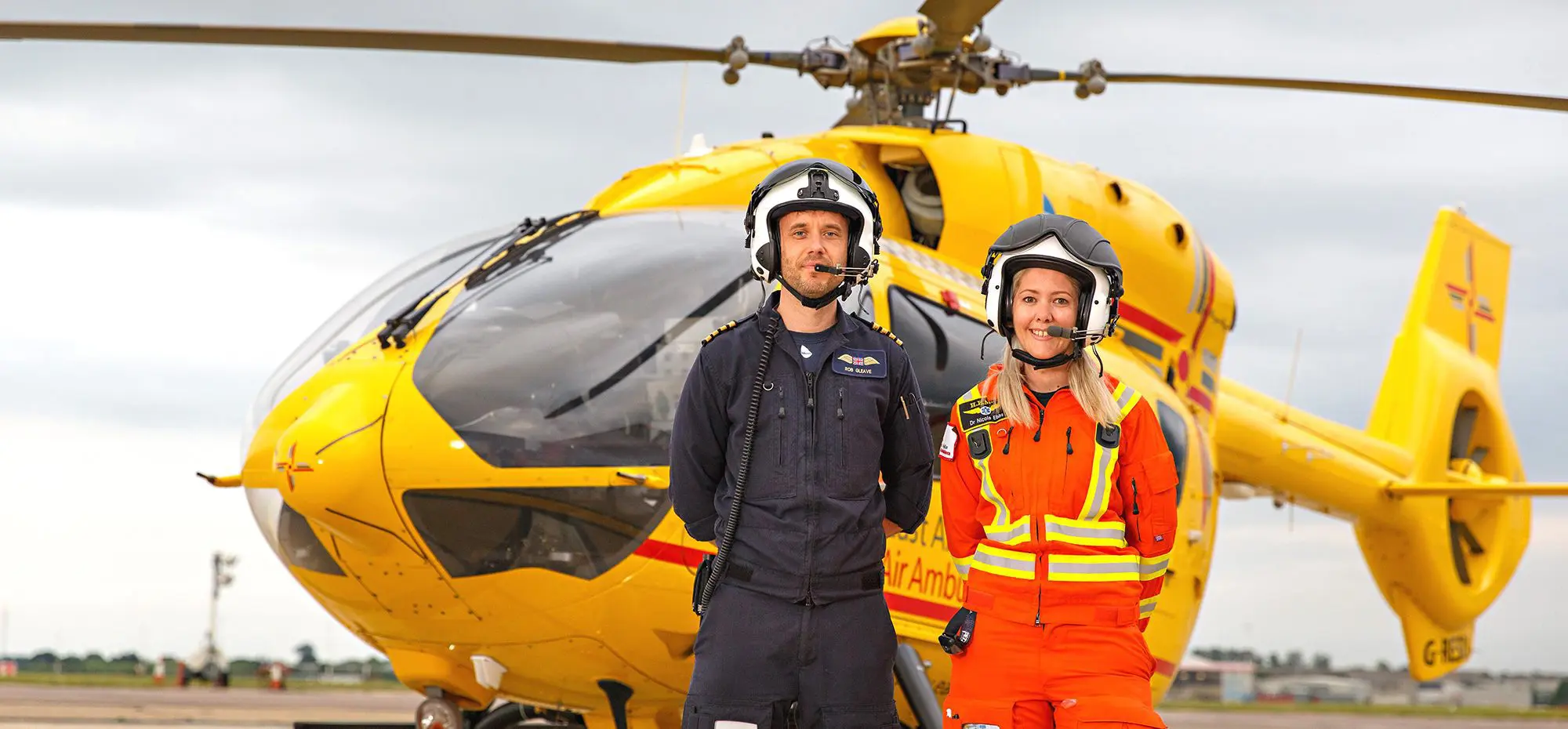
When most of us glance up at the moon, we might notice it for a moment or two but not think too much more about it. For our crews on a night shift, it’s a different story. Every shift after dark, the moon’s phase and its position in the sky can change how much light there is to work with and therefore shape the considerations for the cockpit. In 2025, our crews were tasked over 900 times, by air and road, during the night shift (7pm – 7am). We spoke to Babcock International Group’s pilot, Captain Joe about how moonlight is factored into nighttime operations when the crew are tasked by helicopter to people experiencing medical emergencies in our region.
Crew briefing
“At the start of every shift we follow a standard briefing format. It covers things like the aircraft, Notice to Air Missions, and the weather – including the time of sunset. The thirty minutes after sunset are known as civil twilight. After that, it’s classed as official night, and for us as Helicopter Emergency Medical Service pilots, that brings extra considerations.
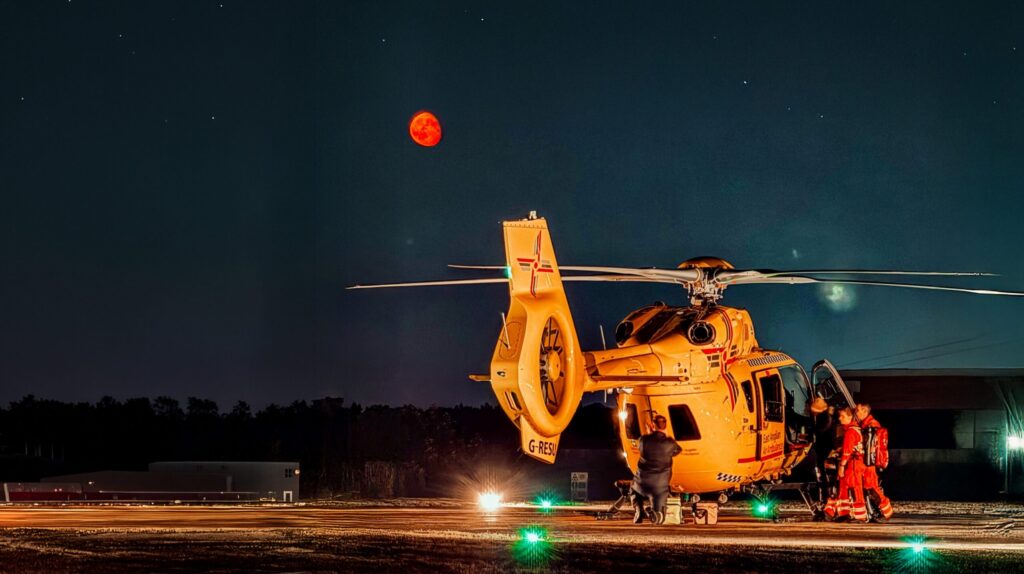
Moon phase
“We always check the phase of the moon. Whether it’s full, crescent, gibbous, waxing or waning, it provides different amounts of light. Our briefings are supported by the Met Office’s Tactical Decision Aid (TDA) Suite, which helps us assess the weather on both day and night shifts. It also tells us about night illumination, which depends on the moon’s phase. Light levels are measured in millilux, a unit of illuminance. The higher the millilux, the more light there is. Generally, if the reading is two millilux or below, we know we have a really dark night ahead with limited moonlight.
Using night vision equipment
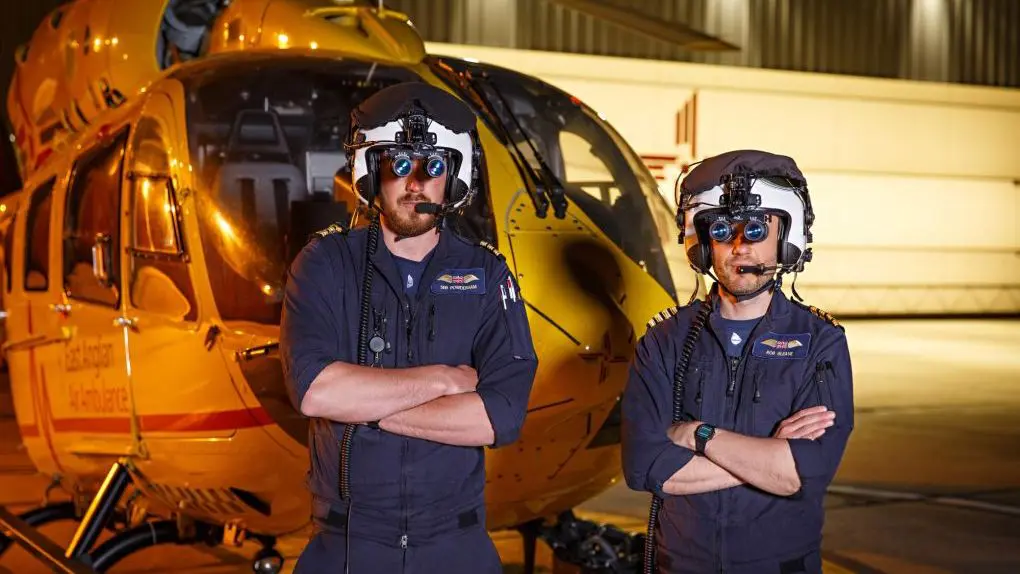
“We use Night Vision Imaging Systems (NVIS) for emergency taskings after dark. This equipment, which includes night vision goggles, amplifies the available light and enhances what we see. It helps us build a clearer picture of hazards and find safe landing sites. But too much light can have an effect like oncoming headlights on full beam, reducing the clarity of the picture. The millilux reading helps us plan for that and minimise any impact.
Moon bearing
“When we’re approaching a landing site, we usually approach into the wind to give better stability and control. But the moon’s bearing, its position in the sky, compared with the wind direction is also something we consider; flying into the moonlight while using NVIS could be like driving into the sun. However, this happens very rarely so we normally stay on the same approach unless it could compromise safety.
Other lights
“Cultural lighting, the lights from our towns and cities, also helps us identify hazards and landing sites from the air. At night, landing sites need to be larger: at least four times the size of the aircraft. While we have grid references which tell us where the ill or injured person is, we can also ask other emergency services at the scene to leave their blue lights on. This gives us additional information to confirm the location of the emergency.
At night, we work to a separate set of Standard Operating Procedures. This includes identifying both a primary and a secondary landing site before we lift and highlighting any threats or considerations. It takes extra time, but it helps us build a clear plan and account for the additional safety considerations that night taskings bring.”
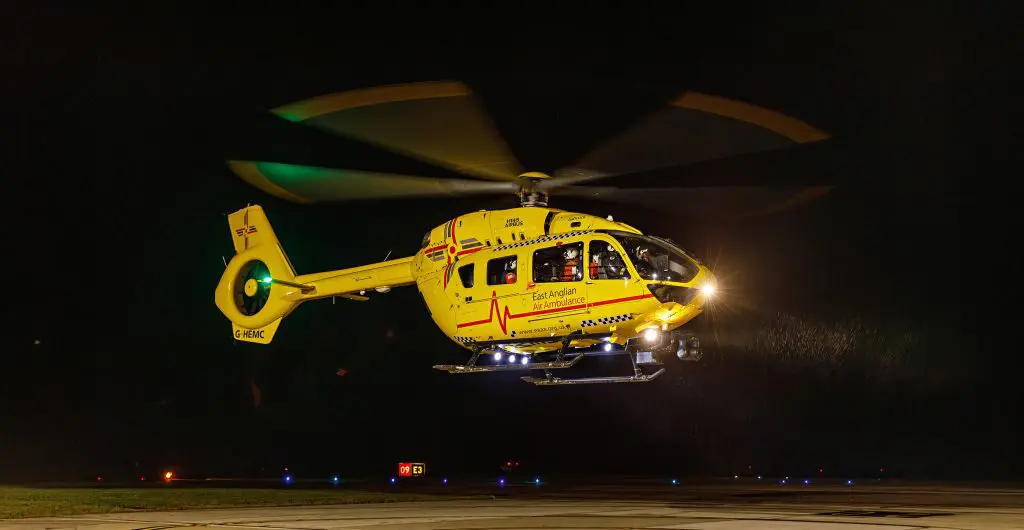
When somebody suffers a medical emergency and needs critical care from our crew, every detail matters. The next time you look up at the moon, know that for our crews it features in every plan they make to reach a patient safely during the hours of darkness.
Read more about how we respond to emergencies at night.
Related News