Baby Clayton’s story demonstrates that anyone of any age can need urgent treatment and care from our crews. Every year, approximately 10% of the people we attend are children and, in 2024/25, 156 of the 1,846 people, who received urgent treatment and care from our doctors and critical care paramedics, were children.
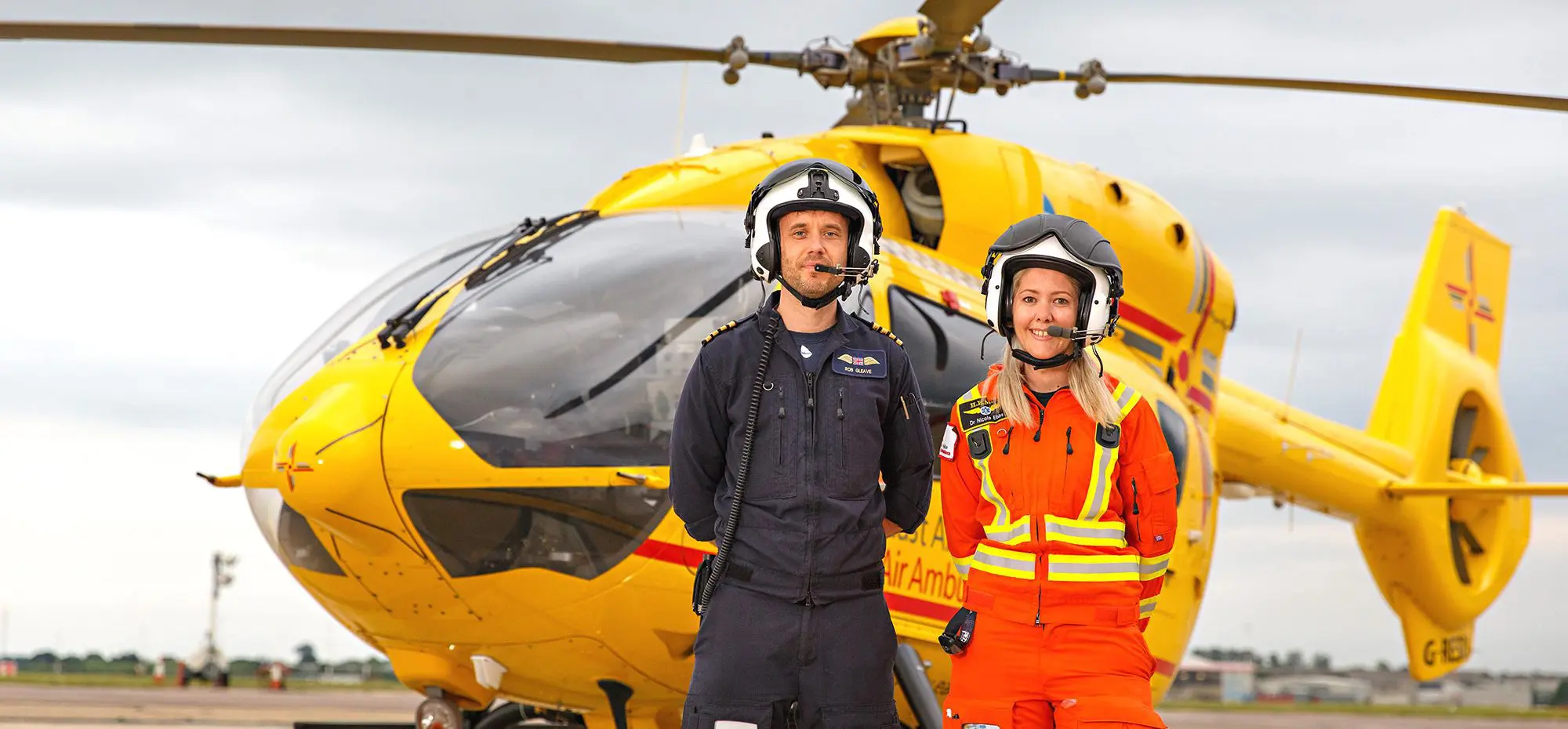
Dr Brendan Fletcher, Consultant in Paediatric Emergency Medicine with East Anglian Air Ambulance explains more about our considerations when we’re called to attend a child or baby.
When we’re tasked
It’s important for the crew to know the age of the young person as soon as possible. This is because there are considerations and variables when it comes to the doses of medications and fluids that can be administered and the equipment that should be used. But it’s not a time for maths and calculators; the crew all carry ‘Page for Age’ cards – guides that give correct dosages for the age of the child.
We pace ourselves and make sure we do the essentials really well, such as monitoring and managing a child’s blood sugar and temperature.
Emotions at the scene
An emergency where the patient is a baby or child is often an emotional environment. In those moments, we do everything we can to bring calm to what is a very frightening situation for loved ones. While our priority is providing the child with the best possible care, we also make sure someone from our team supports and reassures their parents or caregivers, when possible. And we think about the bigger picture too – are there other children nearby? Who will look after them when we transport their sibling to hospital? Safeguarding Children is an important element of the medical care we provide; it is about ensuring the child and the family around them get any additional support that they may need.
Specialist equipment
Our kit bags are packed with everything we need to care for the smallest patients. Some of the equipment we use needs to be different due to the size difference between adults and children – but little doesn’t mean less. Equipment like a laryngoscope – used to help manage the airway when we need to intubate – comes in tiny sizes so we can give the right care at the right time to little ones. Having to do this in children of this age is thankfully rare. We also carry special neonatal harnesses to keep babies safe during a flight, and warming mats to protect them from losing heat, which happens much faster for children than in adults. Every detail matters when it comes to giving children the best chance.
Relationships with other emergency services and specialist hospitals
We’re also aware that emergencies with children and babies who require critical care are emotive for our emergency service colleagues too. They do an excellent job in challenging situations. While we provide enhanced care, such as advanced airway support and vascular access, having multiple people at the scene means we can delegate – and our colleagues from other emergency services are incredible at helping us.
We also have an excellent working relationship with the regional Paediatric Intensive Care Unit in Cambridge – where some of our doctors have trained. All our doctors and paramedics are trained to treat children in the most serious of medical emergencies, and some of us are specialists in paediatric care. This ensures the entire crew is ready to respond to any patient of any age whenever they need us most.
Related News