A pioneering study led by researchers and clinicians from East Anglian Air Ambulance has demonstrated that a procedure usually used in hospital settings can be safely delivered at the scene of incidents and accidents on patients experiencing prolonged out-of-hospital cardiac arrest and can help improve blood flow to the heart and brain during resuscitation.
The ERICA-ARREST* feasibility study investigated whether Resuscitative Endovascular Balloon Occlusion of the Aorta (REBOA) could offer a new treatment option for patients whose hearts cannot be restarted, despite prolonged, high-quality resuscitation efforts.
Out-of-hospital cardiac arrest remains one of the leading causes of death worldwide. Despite advances in emergency care, survival rates remain low, and patients whose hearts cannot be restarted with conventional treatments have few options available to them.
Outcomes for prolonged cardiac arrest have not improved in the last 50 years, highlighting the need for new approaches.
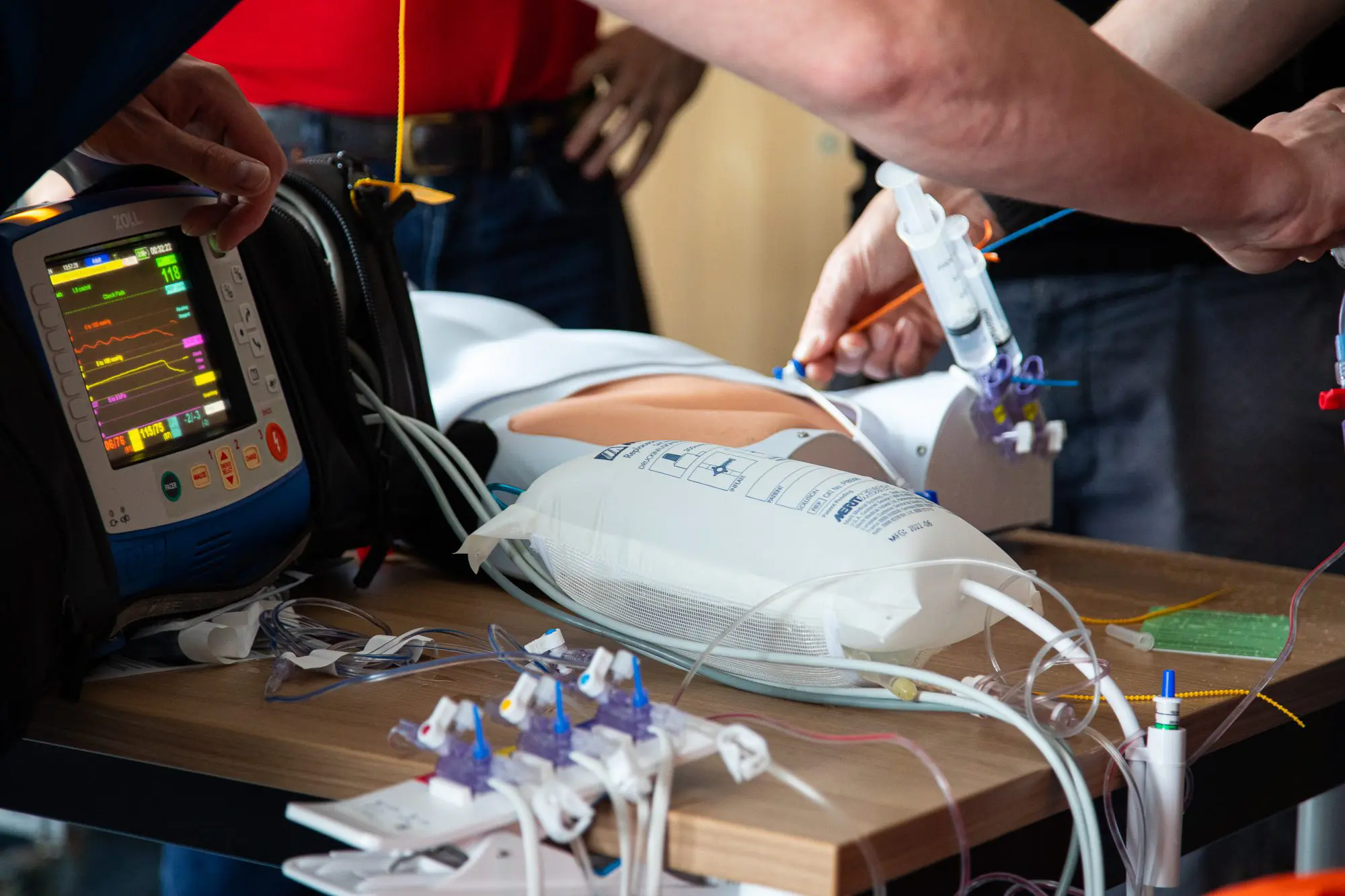
REBOA is a minimally invasive procedure most commonly used to control life-threatening internal bleeding. It involves passing a small balloon through an artery in the groin and inflating it inside the aorta, the body’s main artery. During cardiac arrest, inflating the balloon temporarily blocks blood flow to the lower body, helping to redirect blood towards the heart and brain.
The ERICA-ARREST study set out to establish whether REBOA could be safely delivered by HEMS clinicians. The aim was also to confirm successful occlusion of the aorta; redirection of blood flow to the organs most critical for survival during cardiac arrest – the heart and brain; and whether blood pressure could be improved sufficiently to support resuscitation and oxygen delivery to the brain.
The study by East Anglian Air Ambulance found that:
- REBOA could be successfully delivered by HEMS clinicians and performed safely in a pre-hospital environment, with no procedure-related complications observed
- Once inflated, the balloon successfully blocked the aorta and produced clinically meaningful improvements in blood pressure. Researchers observed an average 59% increase in diastolic blood pressure, helping to meaningfully improve blood flow to the heart and brain during resuscitation.
Encouraging findings despite prolonged cardiac arrest
Although the study was not designed to measure survival outcomes, a subgroup analysis of patients** showed encouraging signals that warrant further investigation. The study included 39 patients, with a mean age of 58.7 years, who experienced non-traumatic cardiac arrest outside hospital. Patients had not responded to conventional advanced resuscitation before REBOA was attempted. The procedure was carried out at a very advanced stage of resuscitation, with a median time of 51 minutes from cardiac arrest to balloon inflation. Despite this, researchers saw substantial improvements in blood pressure following inflation. Among the 33 patients in whom aortic occlusion was confirmed, 24.2% achieved sustained return of spontaneous circulation, meaning their hearts restarted, and 6.1% survived to hospital discharge.
However, researchers stress those figures should be interpreted with caution. ERICA-ARREST was designed to establish whether the intervention was feasible and could produce the expected changes in circulation. It did not have a control group and was not designed or powered to determine whether REBOA improves a patient’s chances of survival.
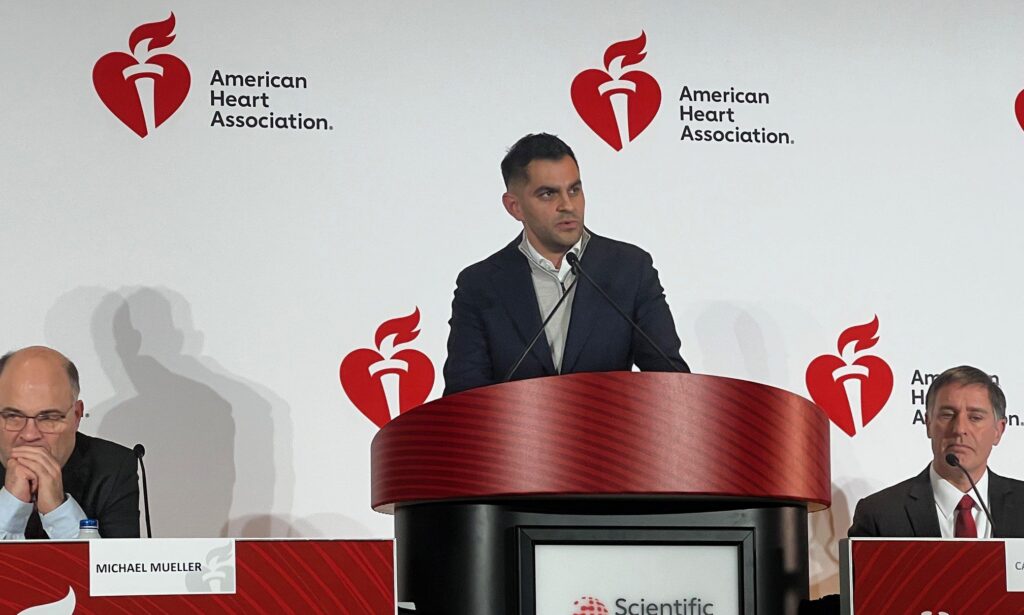
Dr James Price, Consultant Emergency Physician at Cambridge University Hospitals NHS Foundation Trust and HEMS Consultant and Consultant Lead for Research & Development at East Anglian Air Ambulance, said: “Patients who remain in cardiac arrest despite prolonged resuscitation efforts currently have very limited treatment options and face extremely poor outcomes.
“Our study has shown that REBOA can be delivered safely by pre-hospital critical care teams and can improve blood pressure during cardiac arrest, helping to direct blood flow to the organs that matter most.
“While this study was not designed to determine whether REBOA improves survival, these findings provide a strong foundation for further research and represent an important step forward in exploring new treatment options for this group of patients.”
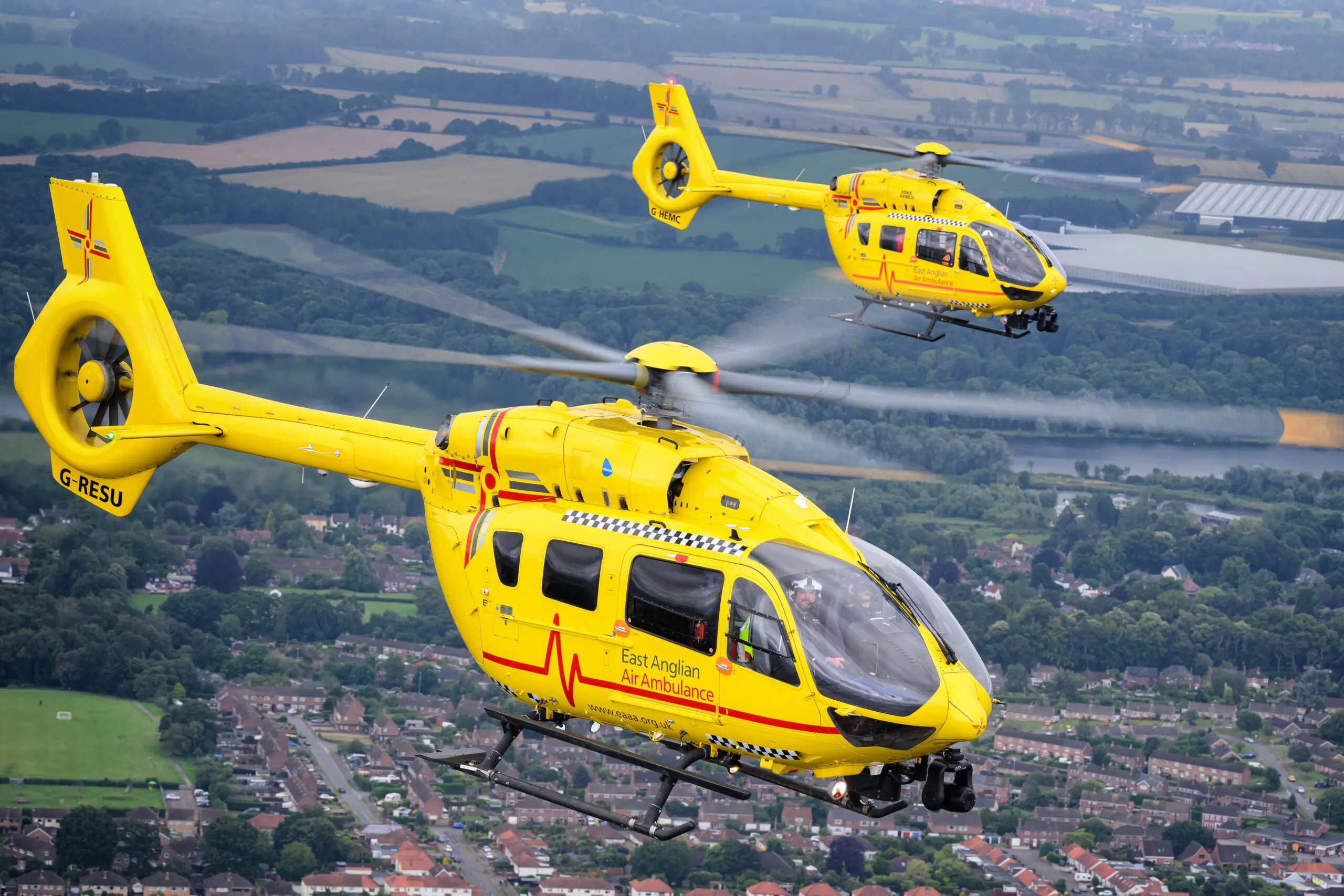
East Anglian Air Ambulance’s helicopter emergency medical service (HEMS) teams regularly attend patients in cardiac arrest. Up 30% of medical emergencies the charity responds to are cardiac-related, with its crews delivering advanced critical care interventions normally only available in hospital environments.
Dr Price said the ERICA-ARREST study represents the culmination of several years of work to develop the clinical skills, governance and research infrastructure required to undertake such a complex intervention outside hospital. The work was conducted by East Anglian Air Ambulance’s RAID (research, audit, innovation and development) group.
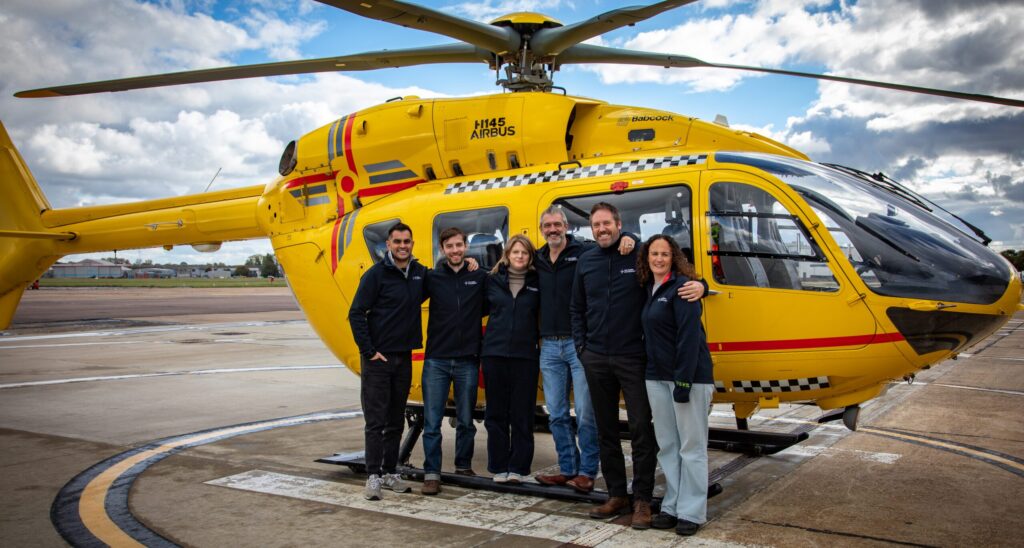
He added: “East Anglian Air Ambulance is first and foremost a regional charity looking after critically ill and injured patients across Bedfordshire, Cambridgeshire, Norfolk and Suffolk, but alongside that clinical work we have built a research programme led by clinicians who look after these patients every day and want to find better ways of treating them, and ultimately save more lives. None of this would have been possible without the huge team behind the study and the support of our ground staff, patients, donors, research partners and grant funders. Importantly, the work involved in developing this programme has also helped improve the day-to-day care we can provide to patients, irrespective of the ERICA-ARREST trial.”
* ERICA-ARREST stands for Emergency Resuscitative Endovascular Balloon Occlusion of the Aorta in Out-of-hospital Cardiac Arrest
** Meeting Utstein comparator criteria
Related News